Pronunciation practice
Listen to the phrase, repeat into the mic — your teacher analyzes the audio and gives a real pronunciation score with corrections and comments.
1 / 3
مرحبا، كيف حالك؟
hello, how are you?
All phrases done
Layla is your AI Arabic teacher who meets you exactly where you are — whether you're starting from the alphabet or polishing media Arabic for work in Cairo or Dubai. She doesn't force a rigid textbook path; instead, she adapts to your goals: travel, business, or simply conversing with family. You'll learn to read right-to-left script, hear the difference between Modern Standard Arabic and Egyptian or Levantine dialects, and finally get your tongue around emphatic consonants like ص and ض. With Layla, every chat is a lesson, and every lesson is a step toward real Arabic.
Chat · voice · progress · vocabulary — one learner profile
Try them here — same pronunciation check and flashcards as in lessons.
Listen to the phrase, repeat into the mic — your teacher analyzes the audio and gives a real pronunciation score with corrections and comments.
1 / 3
مرحبا، كيف حالك؟
hello, how are you?
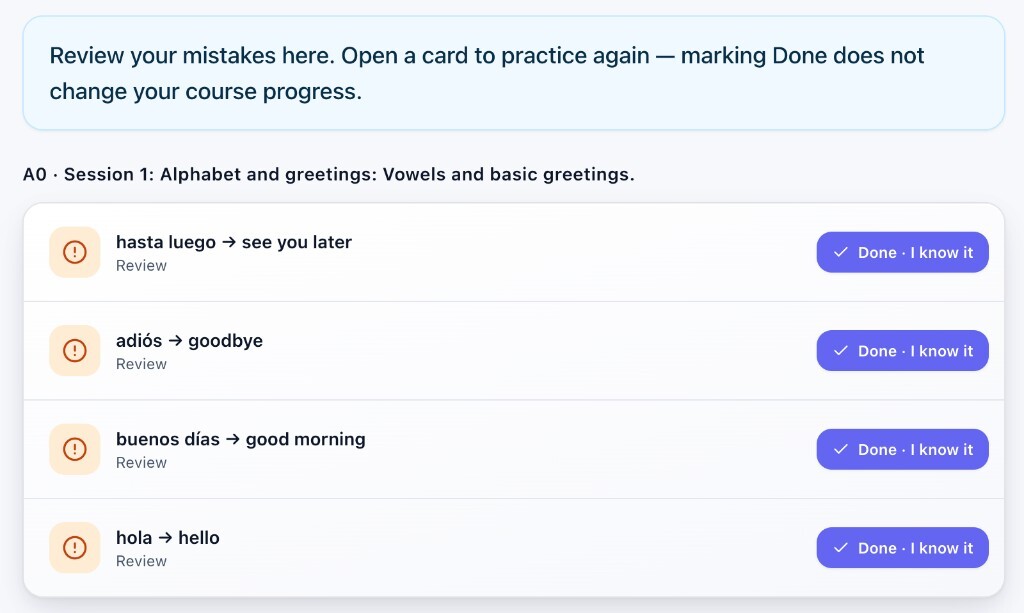
After every lesson you get review cards — and you can generate your own decks on any topic.
مرحبا
Weak spots from your lessons land here: open a card and practice again. Mark Done when you know it — it leaves the shelf; course progress stays intact.
 In full access →
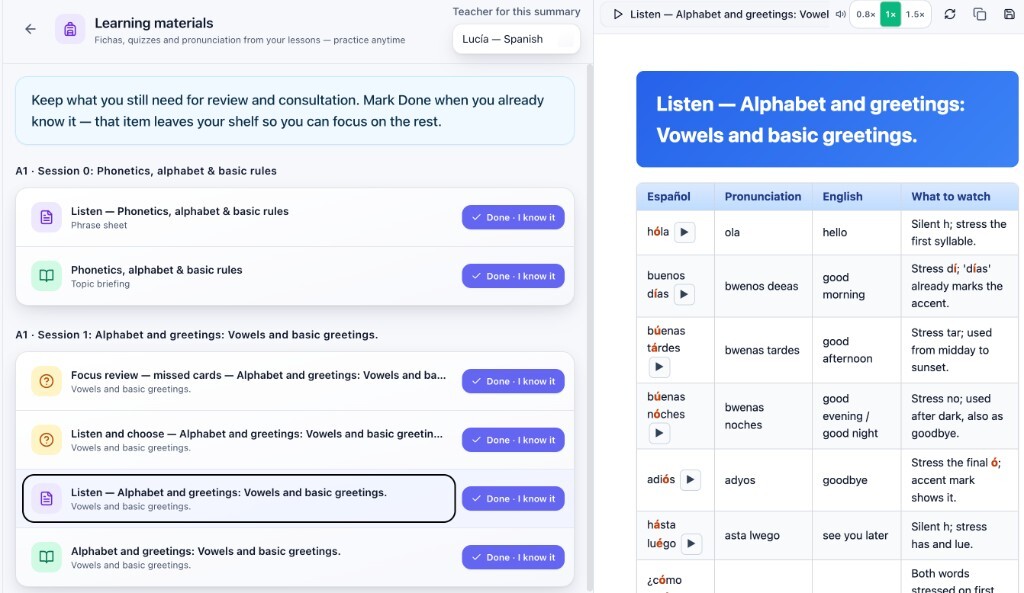
 Sheets, quizzes and pronunciation from your lessons — listen, review and come back anytime.
 In full access →
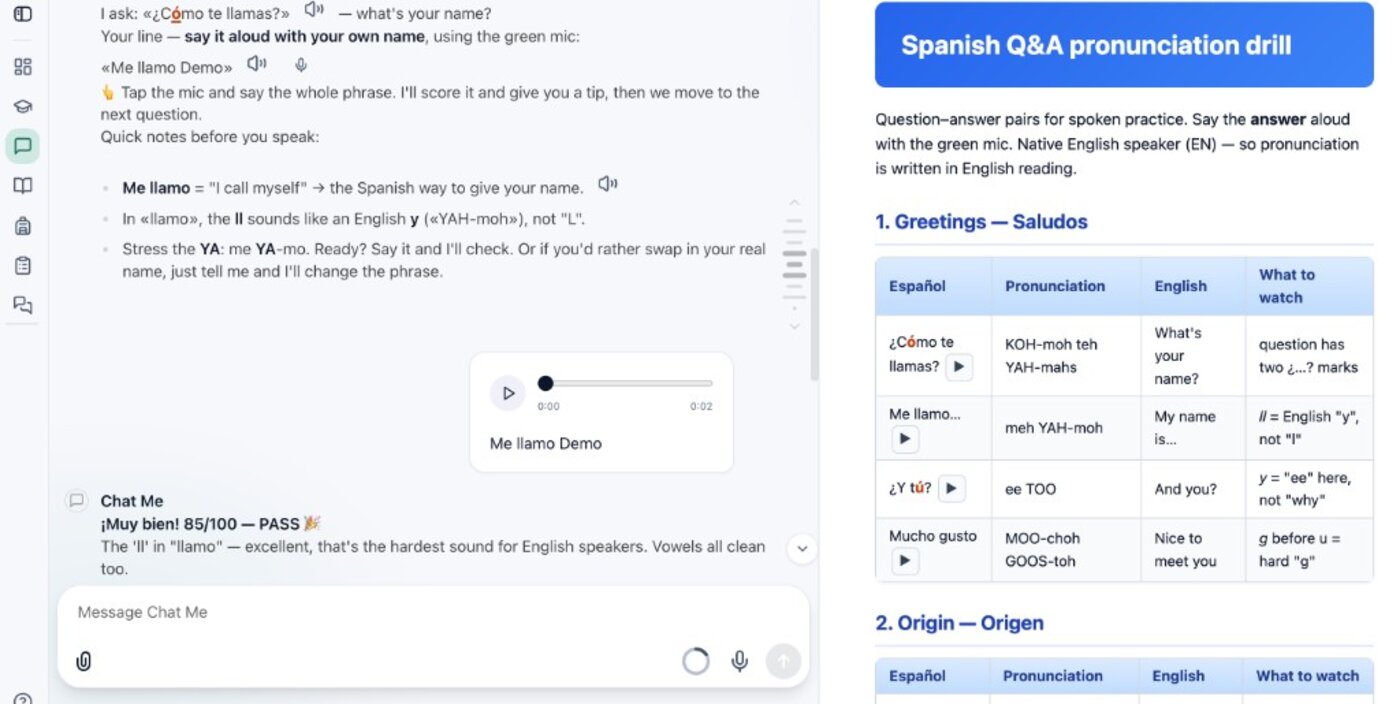
 Your off-lesson consultant: questions, plans and practice anytime — no schedule required.
Not a planned lesson and it does not track CEFR progress — free mode: ask anything, drill pronunciation, or open a sheet beside the chat.
 In full access →
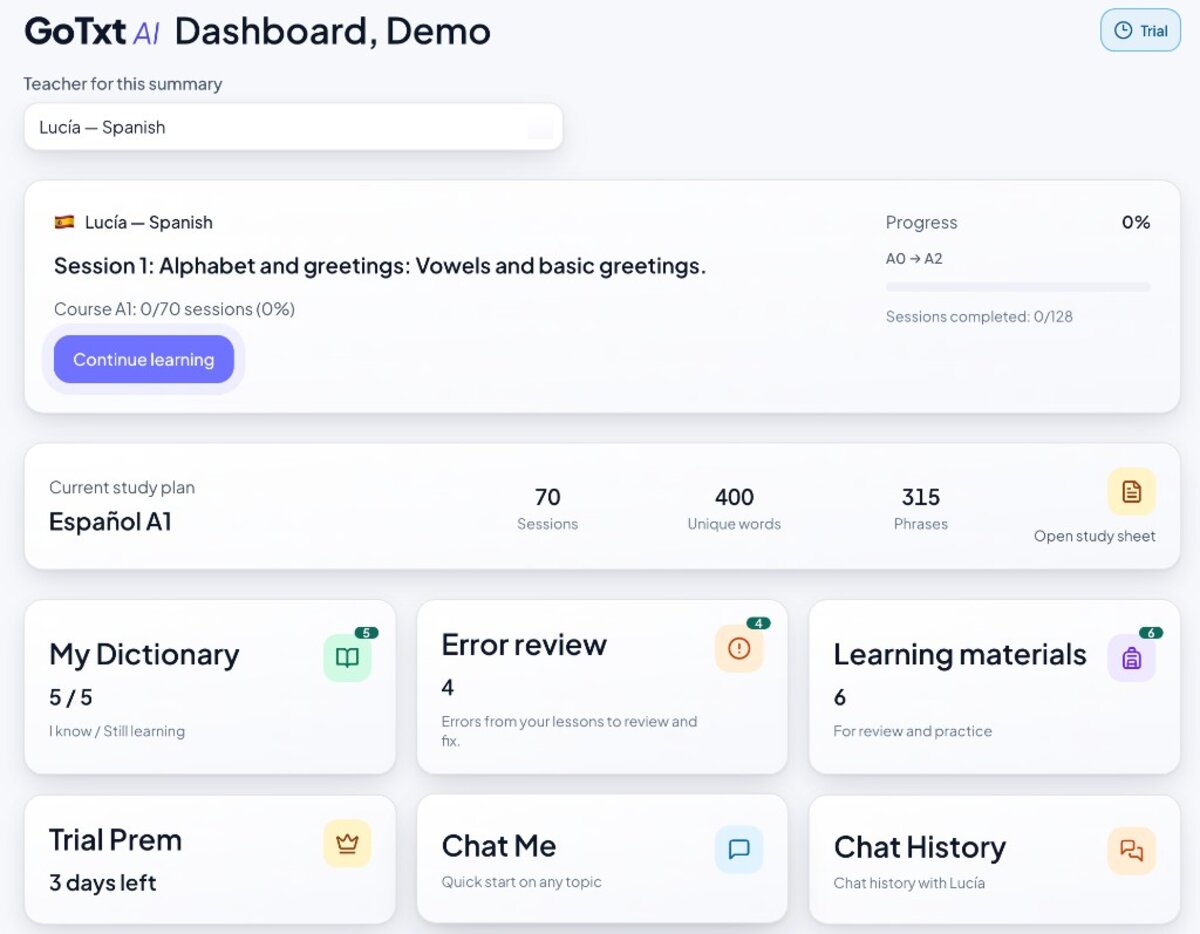
 Your study résumé in one place: current session, course progress, study plan, and quick links to vocabulary, mistakes, materials and Chat Me.
 In full access →
 Not a translator and not a quiz bank. Our AI teachers run real dialogue: they listen, correct, remember your progress, and adapt the plan to your goal — travel, work, exam, or confident conversation.
Your AI tutor
Layla is more than a language model — she's a dedicated teacher who knows the nuances of Arabic. She has helped hundreds of English speakers navigate the complexities of the Arabic script, the rhythm of its pronunciation, and the rich vocabulary rooted in a three-letter system. Layla is patient, encouraging, and always ready to explain grammar in plain English. She remembers your progress, your stumbling blocks, and your wins, making every session feel personal. With her, you're not just practicing; you're building a solid foundation in Arabic, one conversation at a time.
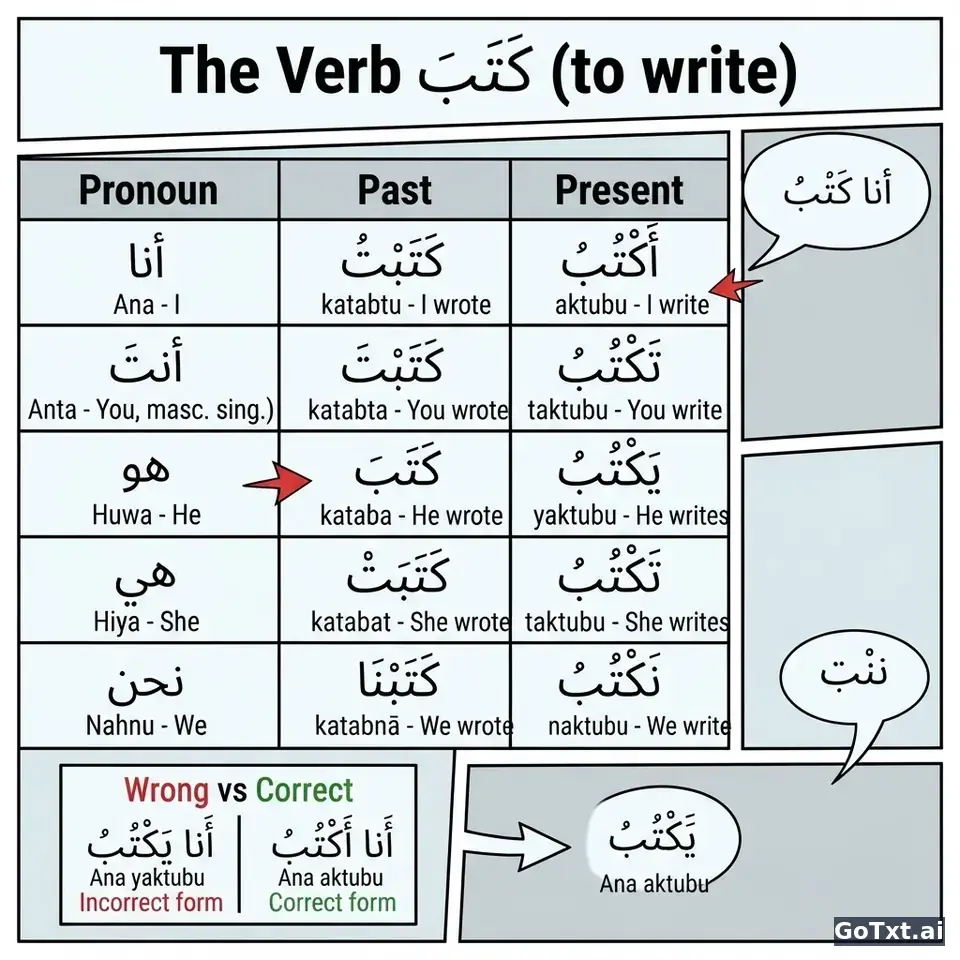 Irregular Verbs in Arabic: One Verb, All Its Forms, Step by Step Most students arrive at Arabic terrified of "irregular verbs." I get it — English drilled into us that go/went/gone makes no sense. But here's the honest truth I tell every class: Arabic doesn't have…
 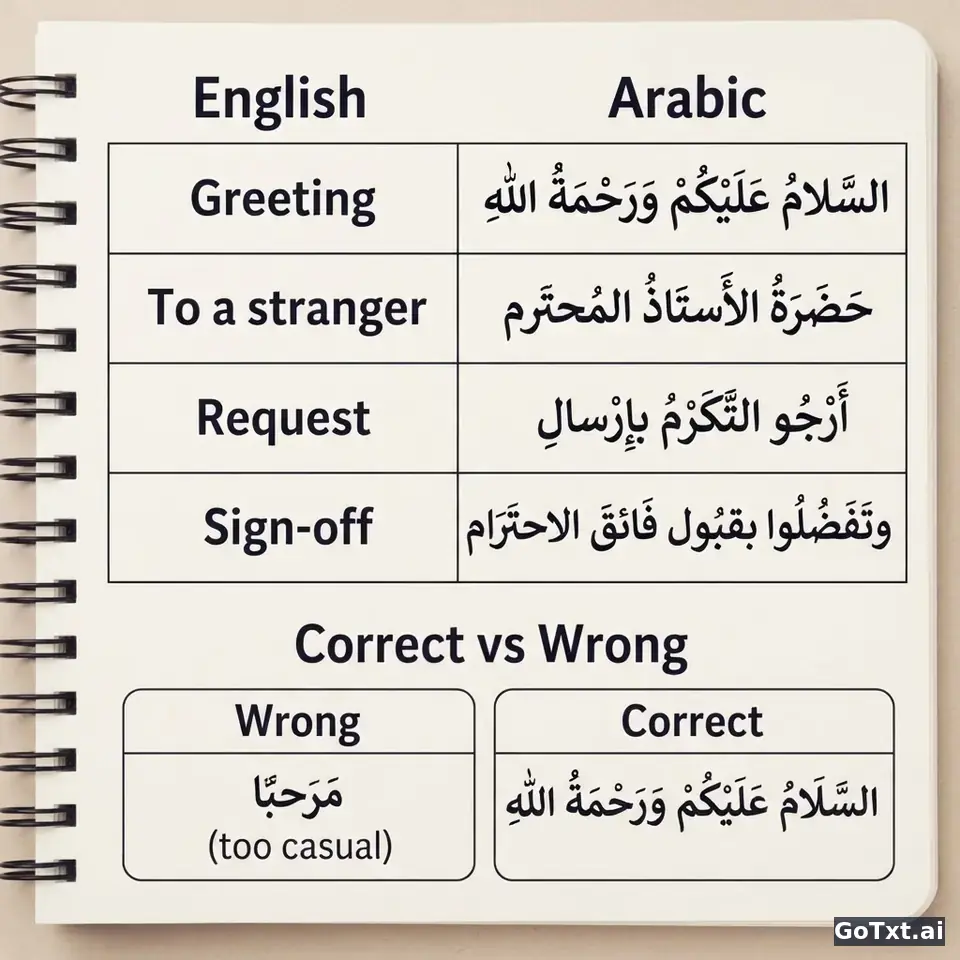 Formal Emails in Arabic: 4 Traps That Reveal You're Not a Native Every week a student shows me a polished Arabic email and asks why the reply felt cold. The grammar is fine. The problem is almost always the same: the letter opens with مرحبا instead of a proper…
 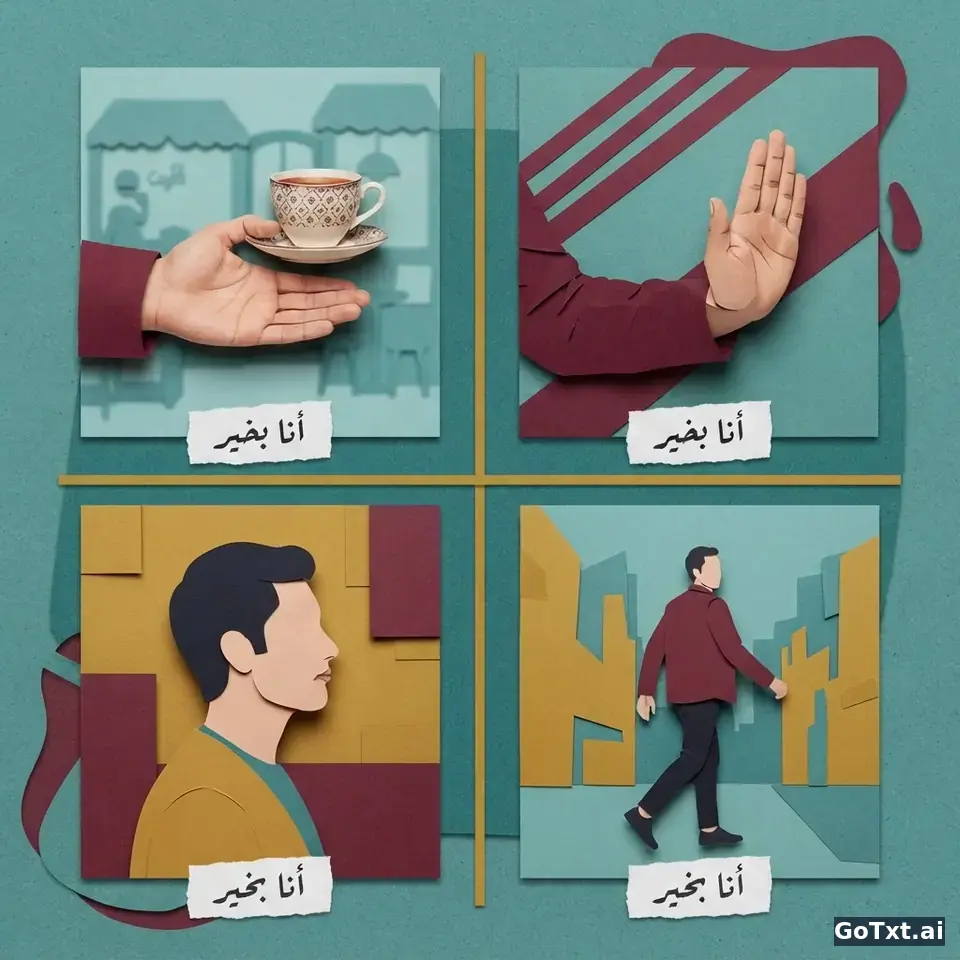 Grammar That Sounds Off: 4 Arabic Traps That Expose an English Speaker Instantly Students come to me with a folder full of perfect verb tables and a puzzled face. «I said it exactly the way the book taught me, and the guy at the café just smiled politely.» I know that smile. It's…
  You or You? Mastering Formal and Informal Address in Arabic When I first started teaching Arabic to English speakers, I noticed the same panic in every classroom. A student walks up to a shopkeeper in Cairo, confidently says anta, and the man's eyebrows shoot…
  Decoding Arabic Humor: What the Classic "Goha and the Donkey" Joke Really Teaches You Every language hides its sense of humor in plain sight, and Arabic is no exception. When I ask new students what they think a (joke) sounds like in Arabic, they usually expect a punchline. Instead,…
  The Verb كَانَ (kāna) in Arabic: Your Shortcut Through the Trickiest Word in the Language Every Arabic learner meets (kāna) early, nods confidently, and then gets ambushed three weeks later. It means "was" — simple enough — until you notice it also builds the present يَكُونُ (yakūnu), the…
  Lost in Translation: Arabic Idioms That Break Your Brain (and How to Learn Them) ical sentence, you translate it word-for-word, and the result sounds like a robot having a stroke? Welcome to the wonderful, maddening world of idioms. In Arabic, this happens constantly. You’ll be…
  Four Arabic Slang Words You’ll Never Find in a Textbook Let me paint you a picture. You’ve spent months drilling MSA, you’ve memorized the i’raab cases, and you feel ready. Then you land in Cairo, and a friend tells you their new job is عايزة دفع — and…
  Four Verbs You Can’t Live Without in Arabic (And One That Bites) Welcome back to the GoTxt kitchen, where we don’t just conjugate verbs—we cook with them. Today, we’re tackling the absolute non-negotiables of Arabic: كَانَ (to be), عِنْدَ (to have), فَعَلَ (to…
  Lost in Translation: Why Arabic Memes and Jokes Don’t Survive Literal Translation Let’s be honest — nothing dies faster than a joke that gets run through a literal translator. You know the feeling: you see a meme in English, it cracks you up, you send it to your Arabic-speaking…
 💡 Layla's top tip: don't get bogged down in grammar rules. Focus on short phrases you can use today, and let the patterns sink in naturally. She'll point out the patterns as you go, so you'll absorb them without memorizing tables.
«I needed to handle basic meetings in Arabic. Layla practiced negotiation phrases with me and explained the cultural context. After a month, I could greet clients and exchange pleasantries confidently.»
«I wanted to learn Egyptian Arabic for travel, not textbook MSA. Layla switched to the dialect, taught me how to order food, and even how to bargain. I felt so much more prepared.»
«My goal is to read Arabic poetry. Layla helped me understand the root system and gave me reading exercises that gradually increased in complexity. The vocabulary engine spaced reviews perfectly.»
The perfect taste