Layla Blog Irregular Verbs in Arabic: One Verb, All Its Forms, Step by Step
Irregular Verbs in Arabic: One Verb, All Its Forms, Step by Step
Take the Arabic verb **كَتَبَ** (kataba — to write) and break it down form by form: past, present, imperative, and the traps English speakers fall into.
Most students arrive at Arabic terrified of "irregular verbs." I get it — English drilled into us that go/went/gone makes no sense. But here's the honest truth I tell every class: Arabic doesn't have irregular verbs the way English does. It has roots and patterns. Once you see the machinery, كَتَبَ (kataba — he wrote) stops being a mystery and becomes a template you can reuse forever.
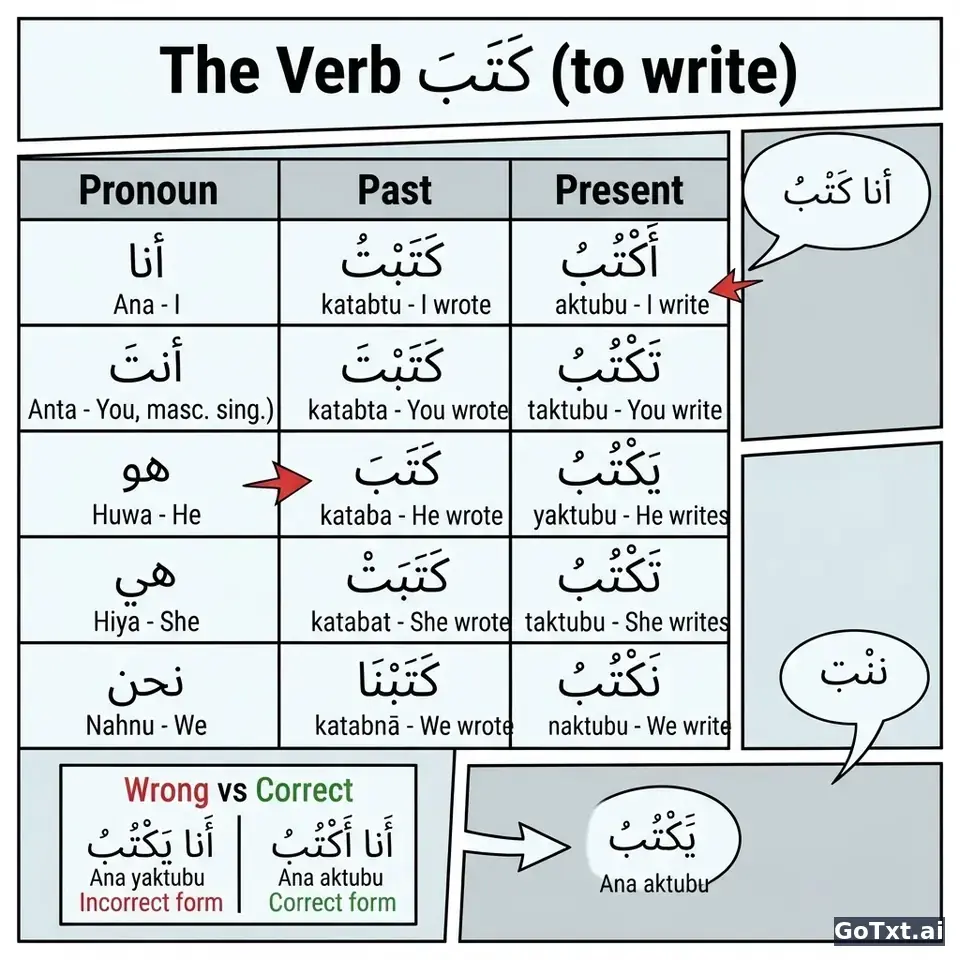
The root here is ك-ت-ب (k-t-b), and everything about writing grows from those three letters. Let's walk through every form slowly.
The Past Tense: Where the Root Shows Its Face
The past tense (الماضي) is the friendly one. You take the root and add suffixes that mark who did it. The core كَتَبَ stays visible in almost every form.
| English | Arabic | Note |
|---|---|---|
| I wrote | كَتَبْتُ | suffix ـتُ = I |
| you wrote (m.) | كَتَبْتَ | suffix ـتَ = you |
| he wrote | كَتَبَ | bare form |
| she wrote | كَتَبَتْ | suffix ـتْ = she |
| we wrote | كَتَبْنَا | suffix ـنَا = we |
Notice the pattern: the verb body barely moves. That's the gift of Arabic — the root is stable, the endings do the work.
The Present Tense: Prefixes Take Over
The present (المضارع) flips the logic. Now the marking happens at the front of the word, with prefixes, and the vowels shift inside. The root ك-ت-ب is still there, just wearing different clothes.
| English | Arabic | Note |
|---|---|---|
| I write | أَكْتُبُ | prefix أَ = I |
| you write (m.) | تَكْتُبُ | prefix تَ = you |
| he writes | يَكْتُبُ | prefix يَ = he |
| she writes | تَكْتُبُ | same as "you" — context decides |
| we write | نَكْتُبُ | prefix نَ = we |
Here's the classic beginner error: mixing the prefix with the wrong pronoun. Students say
The Imperative and the Trap of "Irregular"
The command form (الأمر) drops the present prefix and adds a helping vowel when needed: اُكْتُبْ (uktub — write!). Short, sharp, useful.
Comments
Article discussion: learner comments and GoTxt teacher replies
Drop your emotions below — love, debates, even hate welcome. Comment 👇
Don't want to miss my reply? Leave your email — I'll send a copy.