Layla Blog Formal Emails in Arabic: 4 Traps That Reveal You're Not a Native
Formal Emails in Arabic: 4 Traps That Reveal You're Not a Native
Writing a formal Arabic email? Learn the greeting, address, request and sign-off formulas that native speakers expect — and the four mistakes that give you away.
Every week a student shows me a polished Arabic email and asks why the reply felt cold. The grammar is fine. The problem is almost always the same: the letter opens with مرحبا instead of a proper formal greeting, and it closes with شكرا as if you were texting a friend. Arabic business writing is a set of formulas, and once you know the four traps, you sound like you belong.
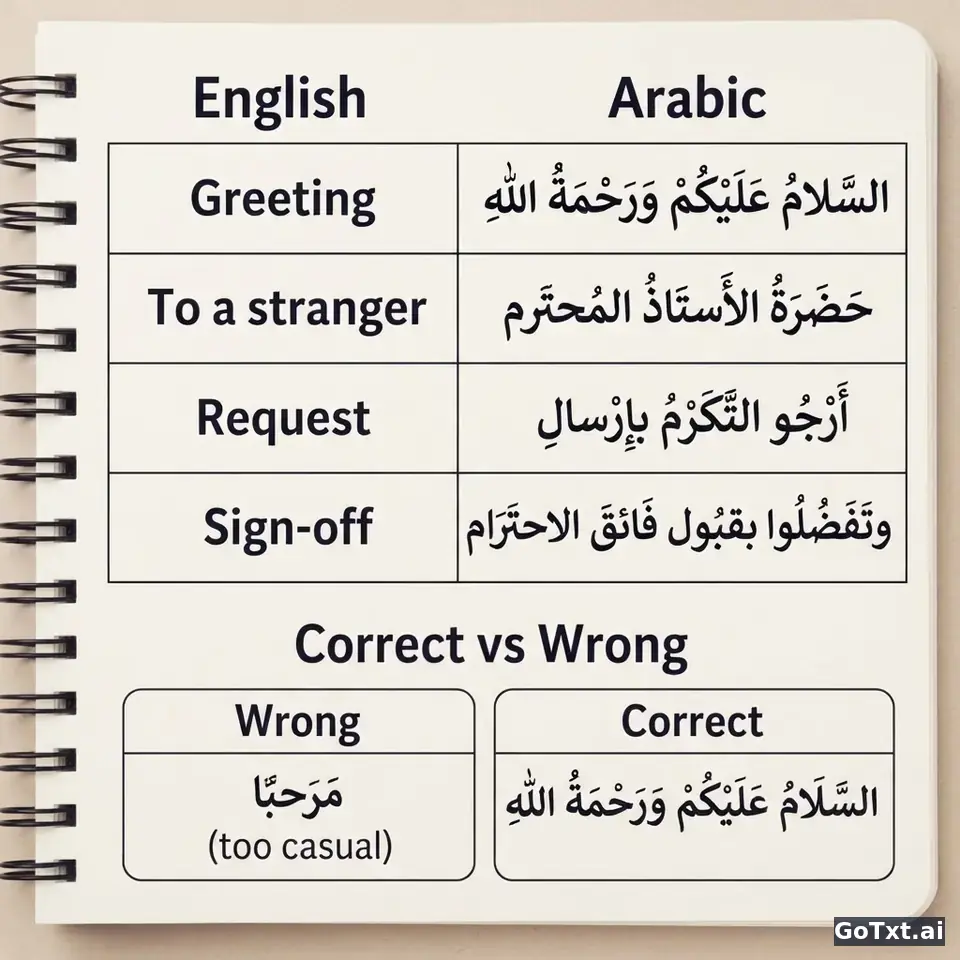
Trap 1: The greeting is a formula, not a mood
In English you can open with "Hi" and nobody blinks. In Arabic, the register of your first line sets the whole tone. مرحبا is fine for a colleague you chat with daily, but in a formal letter it reads as abrupt. The safe opener for almost any official email is السلام عليكم ورحمة الله, and you can follow it immediately with the addressee's title.
| English intent | Arabic formal | Too casual |
|---|---|---|
| To an unknown official | حضرة الأستاذ المحترم | مرحبا |
| To a company | السادة شركة ... المحترمين | أهلا |
| Reply to a stranger | عزيزي الأستاذ | هاي |
Trap 2: You address the person, not the task
English emails often jump straight to the point: "I need the report by Thursday." Arabic formal writing wraps the request in courtesy first. The verb أرجو ("I hope/request") does most of the work, and the polite construction أرجو التكرم بـ softens it further. Compare:
| English | Blunt Arabic | Formal Arabic |
|---|---|---|
| Send me the file | أرسل لي الملف | أرجو التكرم بإرسال الملف |
| I want a meeting | أريد اجتماعا | أرجو تحديد موعد للاجتماع |
| Answer soon | أجب بسرعة | آمل الرد في أقرب وقت |
Trap 3: The sign-off carries the respect
This is where most learners lose the reader. شكرا at the end of a formal Arabic letter feels like a shrug. Native writers close with a blessing formula or a respect formula, and they often add a line wishing the reader well before their name. وتفضلوا بقبول فائق الاحترام is the classic, and مع خالص التقدير works when the tone is slightly warmer.
One more detail: in Arabic you sign with your full name and often your title underneath, not a first name alone. A bare "Sara" after a formal body breaks the register you spent three paragraphs building.
Comments
Article discussion: learner comments and GoTxt teacher replies
Drop your emotions below — love, debates, even hate welcome. Comment 👇
Don't want to miss my reply? Leave your email — I'll send a copy.