Pronunciation practice
Listen to the phrase, repeat into the mic — your teacher analyzes the audio and gives a real pronunciation score with corrections and comments.
1 / 3
你好吗?
nǐ hǎo ma?
hello, how are you?
All phrases done
Mei builds Mandarin around your goal — travel, drama, work, or HSK — with tones, real dialogue, and explanations in English. On GoTxt you choose a script track: Pinyin (Latin letters, no characters) or classic Traditional characters (漢字). Want to speak from day one without strokes? Pick Pinyin. Need reading and exam writing? Pick characters. Same teacher, two clear modes — not “pinyin first, then you must learn characters later in the same path.”
Chat · voice · progress · vocabulary — one learner profile
Try them here — same pronunciation check and flashcards as in lessons.
Listen to the phrase, repeat into the mic — your teacher analyzes the audio and gives a real pronunciation score with corrections and comments.
1 / 3
你好吗?
nǐ hǎo ma?
hello, how are you?
After every lesson you get review cards — and you can generate your own decks on any topic.
你好
nǐ hǎo
Weak spots from your lessons land here: open a card and practice again. Mark Done when you know it — it leaves the shelf; course progress stays intact.
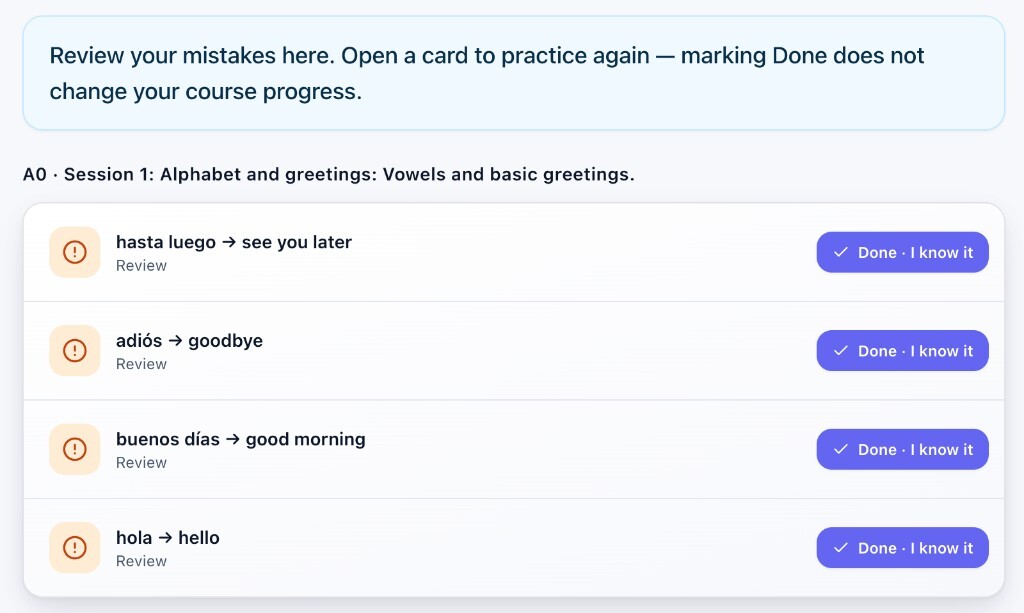 In full access →
Sheets, quizzes and pronunciation from your lessons — listen, review and come back anytime.
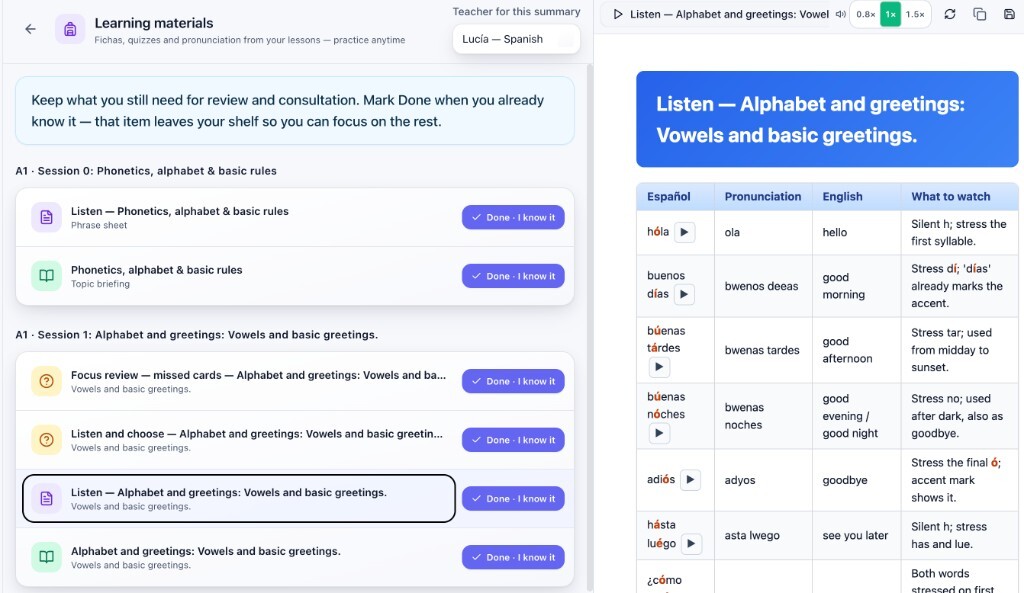 In full access →
Your off-lesson consultant: questions, plans and practice anytime — no schedule required.
Not a planned lesson and it does not track CEFR progress — free mode: ask anything, drill pronunciation, or open a sheet beside the chat.
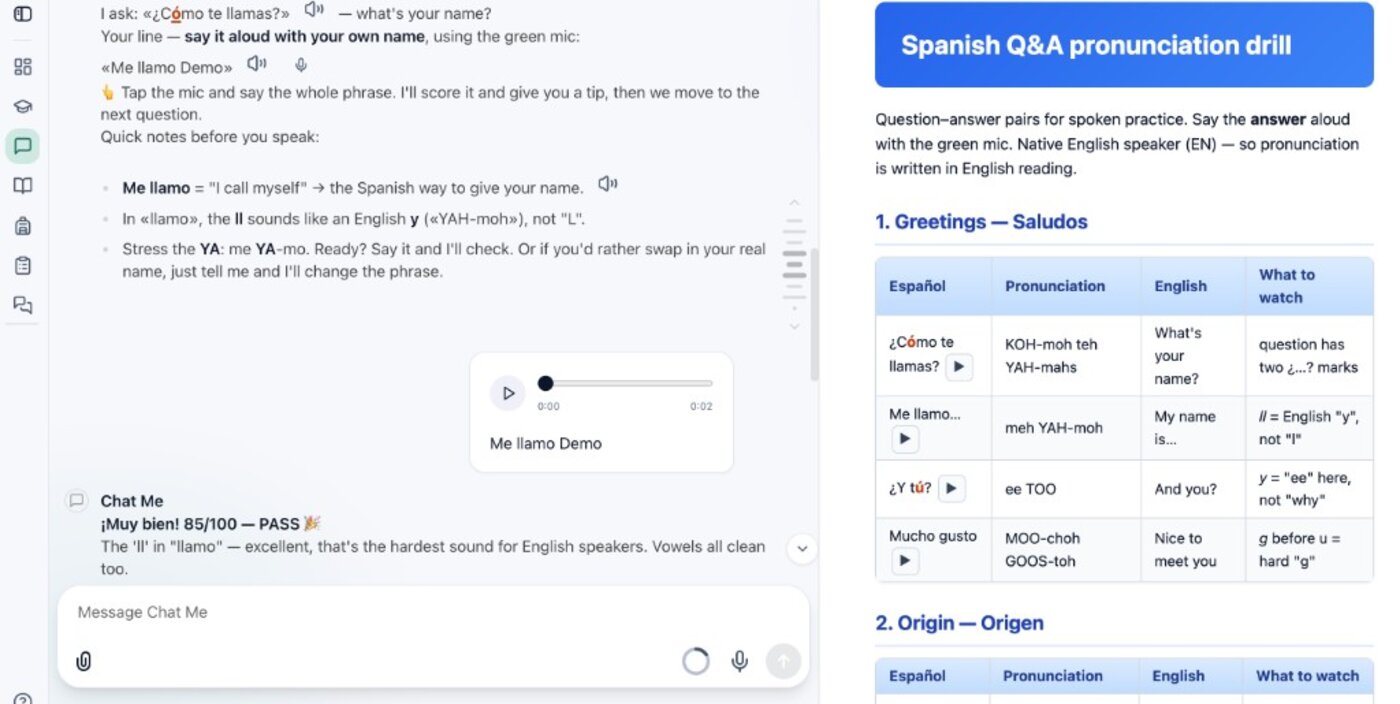 In full access →
Your study résumé in one place: current session, course progress, study plan, and quick links to vocabulary, mistakes, materials and Chat Me.
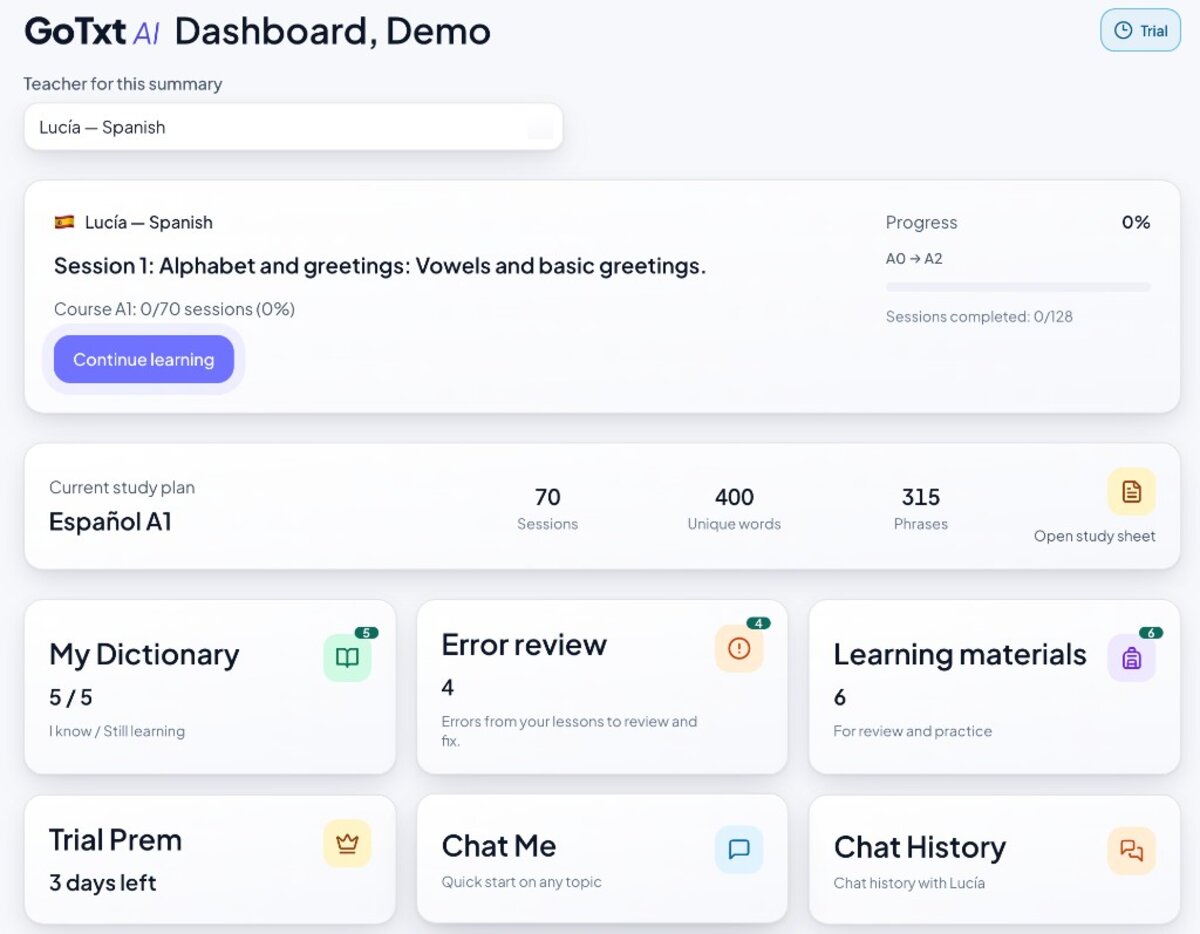 In full access →
Not a translator and not a quiz bank. Our AI teachers run real dialogue: they listen, correct, remember your progress, and adapt the plan to your goal — travel, work, exam, or confident conversation.
Your AI tutor
Mei is built for Mandarin learners who struggle with tones — and for the big product choice: script. GoTxt offers two tracks: Pinyin (Latin with tone marks, no hanzi) and classic Traditional characters (漢字). You pick one; Mei keeps dialogue, pronunciation feedback, and English explanations in that mode. Patient, practical, and available whenever you open the chat.
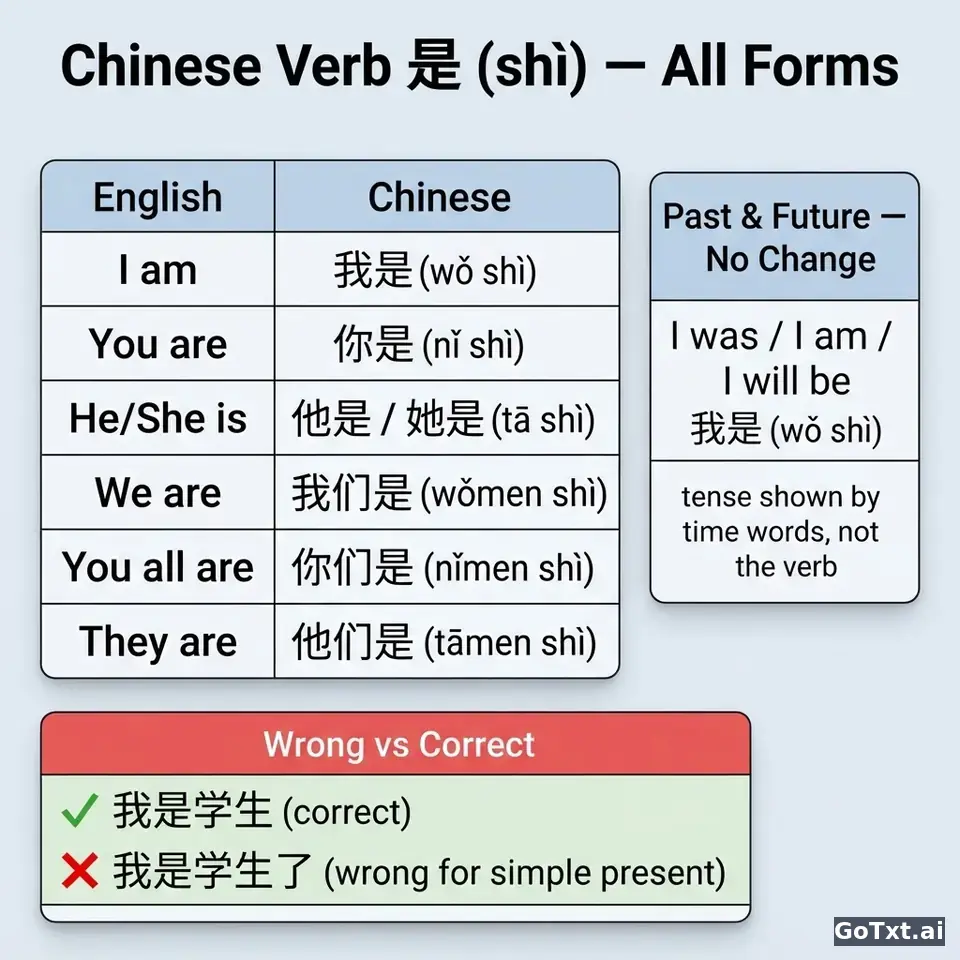 Chinese Irregular Verbs: One Verb, All Its Forms, Explained Step by Step Every week a student asks me the same nervous question: "Mei, where is the list of Chinese irregular verbs?" I always smile, because the honest answer surprises them. Chinese has no conjugation…
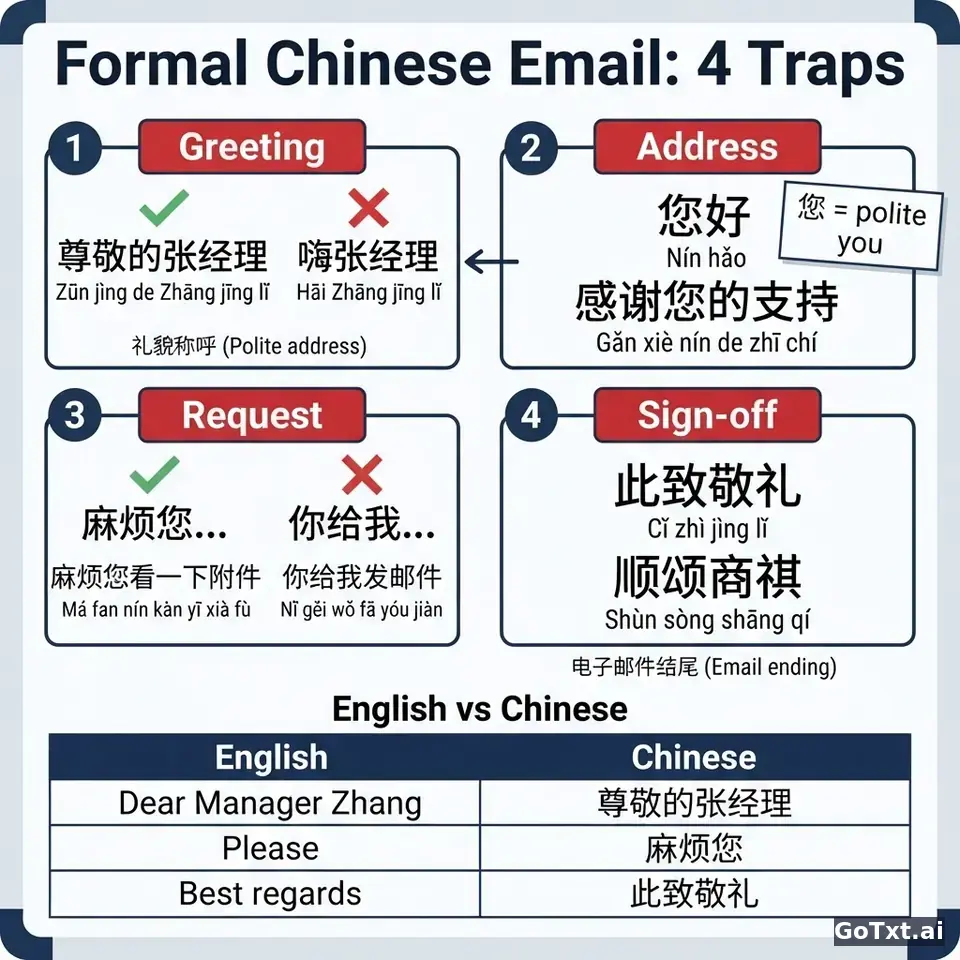 Formal Emails in Chinese: 4 Traps That Instantly Reveal You're Not a Native I've graded hundreds of business emails from English speakers writing in Chinese, and the same four mistakes show up almost every time. The grammar is fine. The vocabulary is fine. What gives people…
 Grammar That Sounds Weird: 4 Chinese Traps That Instantly Mark You as a Foreigner I've taught Chinese for eleven years, and the most painful moment in class is not when a student says something wrong. It's when they say something perfectly correct — and my face does that tiny…
 You or You? How Chinese Actually Handles "You" (And Why It Trips English Speakers) Every English speaker learns one Chinese word in week one: nǐ (你), meaning "you." Then, somewhere around lesson three, a textbook quietly drops nín (您) on you and mutters something about "formal…
 Decoding a Classic Chinese Joke: Why "The Day the Horse Fell" Still Makes Me Laugh I still remember the first time a colleague told me this joke at a noodle shop in Chengdu. I laughed politely, understood maybe half of it, and spent the next twenty minutes asking her to explain why…
 The One Chinese Verb That Breaks English Brains: A Deep Dive into 给 (gěi) Every semester, a student walks into my class convinced Chinese is "just tones." Then we hit and the room goes quiet. It means "to give," sure — but it also means "for," "to," "let," and it hides…
 Lost in Translation? 5 Chinese Idioms That Make No Sense in English (and How to Actually Learn Them) mǎ hǔ hǔ), your brain probably conjures an image of a horse, another horse, and a confused tiger. Logically, that phrase should be about a zoo escape, not a casual “so-so” response to “How are you?”…
 4 Gen-Z Chinese Slang Words That Textbooks Won’t Teach You Let’s be honest: the Chinese in your textbook is like a suit and tie—perfect for a job interview, but you’d look ridiculous wearing it to a house party. When I first moved to China, I had a flawless…
 Four Verbs You Can’t Live Without in Chinese (And Why 是 Isn’t “To Be”) Let’s be honest: when you first open a Chinese textbook, the verbs look like a wall of bricks. But here’s the secret — you can survive a week in Shanghai with just four of them. Not “survive” like a…
 Why Literal Translation Kills the Joke: Memes That Get Lost Between English and Chinese Let me paint a scene. You’re scrolling through WeChat, and a friend sends you a meme that’s supposed to be hilarious. But when you read the Chinese caption—这个梗我不懂了 (this meme, I don’t get it)—you…
💡 Mei guides you through these pitfalls with clear English explanations. Mix up a tone — she’ll correct gently and you’ll get it.
«I needed basic Mandarin for a client meeting. Mei helped me practice greetings and polite phrases in Pinyin first — I wasn’t blocked by characters. By the flight I could order dinner and take a taxi without panic.»
«For HSK I switched to the character track. Mei broke vocab and grammar into manageable pieces and tested me with real-style tasks. I passed on the first try.»
«I loved Chinese movies but understood nothing. Mei started me in Pinyin so I could hear tones and catch phrases — now I hum along and recognize more every week.»
The perfect taste