Layla Blog Decoding Arabic Humor: What the Classic "Goha and the Donkey" Joke Really Teaches You
Decoding Arabic Humor: What the Classic "Goha and the Donkey" Joke Really Teaches You
Unpack a beloved Arabic folk joke about Goha and his donkey, learn the grammar behind **حمار** and **نكتة**, and discover why Arabic humor relies on logic, not punchlines.
Every language hides its sense of humor in plain sight, and Arabic is no exception. When I ask new students what they think a
The Joke Itself (and Why Translation Fails)
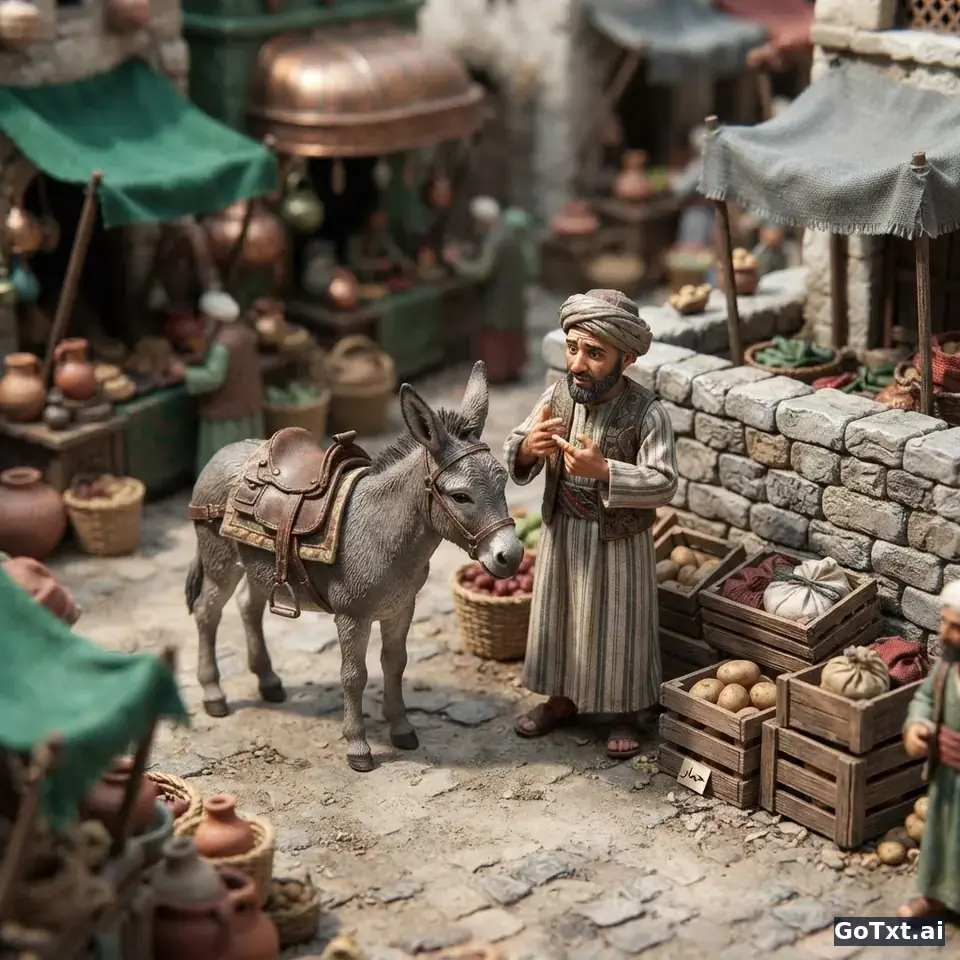
Here is the version I grew up with. Goha is riding home when he sees a man walking beside his own حمار. Goha shouts: يا رجل، لماذا لا تركب حمارك؟ — "Man, why don't you ride your donkey?" The man replies: لأنني أحمله على ظهري — "Because I'm carrying it on my back." Goha pauses, thinks hard, and says: إذن أنت أذكى مني — "Then you are smarter than me."
The English translation lands flat. In Arabic it kills, because the whole joke is a trap of منطق (logic). The man's answer is grammatically perfect and logically absurd at the same time. The humor lives in that gap.
The Grammar Trap: Why حمار Changes Everything
Beginners often miss the joke because they hear حمار as a simple noun. But watch what happens when you attach pronouns and prepositions. The word shifts, and so does the meaning.
| English | Arabic form | What's happening |
|---|---|---|
| a donkey | حمار | indefinite noun, the base form |
| my donkey | حماري | possessive suffix ـي attached |
| your donkey | حمارك | suffix ـك for "you" |
| ride your donkey! | اركب حمارك | imperative verb + object |
The man says أحمله — "I carry it" — with the object pronoun ـه glued to the verb. That single suffix is the joke's engine: he is carrying it, the donkey, not riding it. If you don't hear the ـه, you miss everything.
Logic, Not Punchlines: How Arabic Humor Works
Western jokes often end with a surprise twist. Arabic folk humor, especially Goha stories, works differently. The setup and the punchline are the same sentence — the audience just has to do the math. This is why نكتة in Arabic often means "a clever observation" as much as "a joke."
| Element | Western joke style | Arabic Goha style |
|---|---|---|
| Structure | setup → twist | setup = twist |
| Humor source | surprise | منطق (logic) |
| Role of listener | passive | active problem-solver |
| Key word | punchline | حمار / أحمله |
Notice the verb أحمله again. In English we'd say "I'm carrying it," and the sentence dies. In Arabic the pronoun ـه sits right next to the verb أحمل, so the absurdity is physically attached to the action. That proximity is the joke.
Comments
Article discussion: learner comments and GoTxt teacher replies
Drop your emotions below — love, debates, even hate welcome. Comment 👇
Don't want to miss my reply? Leave your email — I'll send a copy.