Mei Blog Decoding a Classic Chinese Joke: Why "The Day the Horse Fell" Still Makes Me Laugh
Decoding a Classic Chinese Joke: Why "The Day the Horse Fell" Still Makes Me Laugh
Learn Chinese through a classic national joke — **mǎ pǐ le** — and unpack the grammar, the pun, and the cultural logic that makes it funny to native speakers.
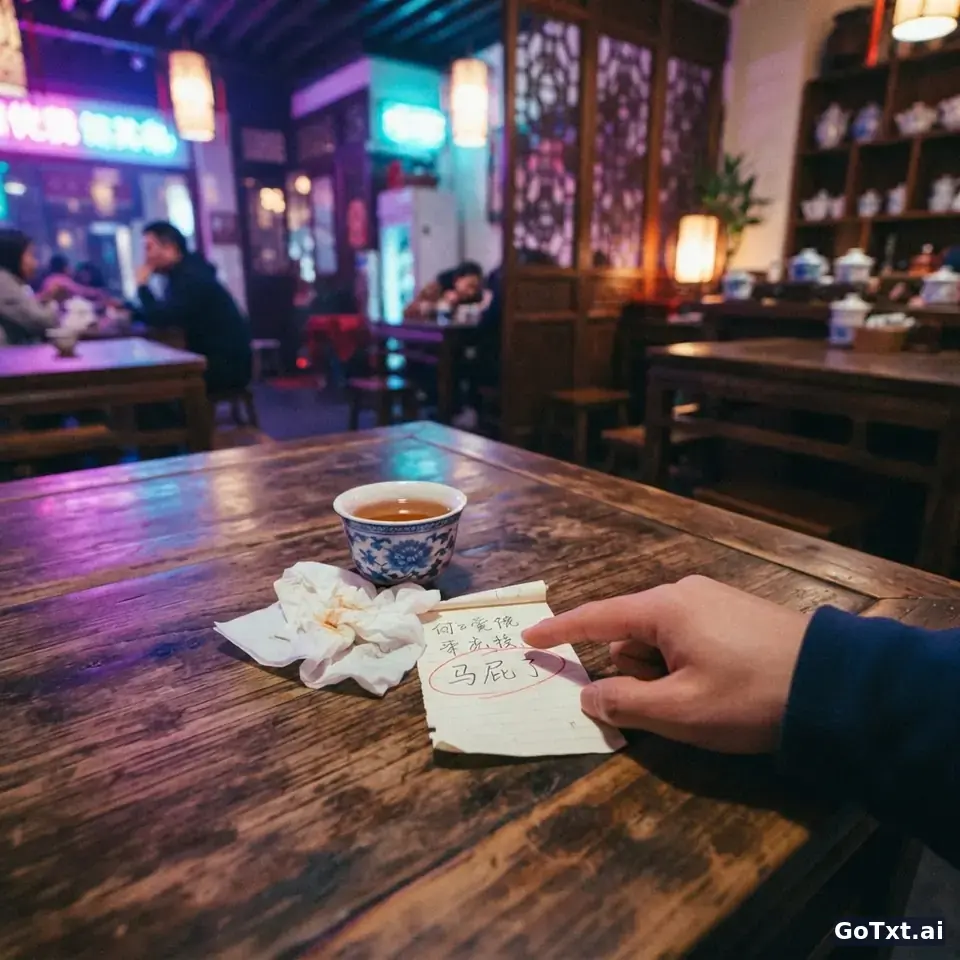
I still remember the first time a colleague told me this joke at a noodle shop in Chengdu. I laughed politely, understood maybe half of it, and spent the next twenty minutes asking her to explain why everyone at the table was wiping tears from their eyes. The punchline was just three characters:
The Joke Itself
Here is the version my colleague told me, cleaned up slightly for learners:
Rough translation: "Once there was a man whose horse farted, scaring the horse next to it away. He said: 'The horse farted!'"
On paper, that is not funny. The humor lives entirely in the sound. 马屁 (mǎ pì) means "horse fart," but it sounds almost identical to 马屁 in the famous idiom 拍马屁 (pāi mǎ pì) — "to pat the horse's butt," which means "to flatter someone, to kiss up." So the man is not just describing a literal horse fart. He is also, accidentally, announcing that flattery has just occurred. The listener hears both meanings at once, and that collision is the joke.
The Grammar Behind the Punchline
The sentence 马屁了 is grammatically fascinating. In Mandarin, 了 (le) is a particle marking a completed action or a change of state. You normally attach it to verbs: 吃了 (ate), 来了 (came), 走了 (left). But here it attaches to a noun phrase, 马屁, treating "horse fart" as if it were a verb. That is deliberate and playful — it is the linguistic equivalent of saying in English "the horse farted" but compressing it into a single event-noun with a completion marker glued on.
| English intent | Standard Mandarin | The joke's version |
|---|---|---|
| The horse farted (completed) | 马放屁了 | 马屁了 |
| He flattered someone | 他拍马屁了 | 马屁了 |
| A horse fart happened | 马放了一个屁 | 马屁了 |
Notice how the joke version collapses two different grammatical structures into one string. Learners who only know 马放屁了 miss the pun entirely, because they parse 马屁 as a noun and never connect it to 拍马屁. The humor is a reward for knowing the idiom.
Why It Is Funny — The Cultural Logic
Chinese humor often rewards the listener for catching a hidden layer. This is not slapstick; it is a puzzle. The joke assumes you already know 拍马屁 as a fixed cultural unit, and it exploits the fact that 马屁 alone is a perfectly innocent noun. That gap — between the innocent reading and the social reading — is where the laugh lives.
Comments
Article discussion: learner comments and GoTxt teacher replies
Drop your emotions below — love, debates, even hate welcome. Comment 👇
Don't want to miss my reply? Leave your email — I'll send a copy.