 Pauses in Polish conversation · Zosia · GoTxt
GoTxt Zosia Blog Pauses in Polish conversation
The Art of the Polish Pause: Why Silence Speaks Louder Than Words — How To Speak Polish
Learn how pauses and hesitation shape Polish conversation — when silence is polite, when it signals doubt, and the filler words that keep you sounding natural. How To Speak Polish.
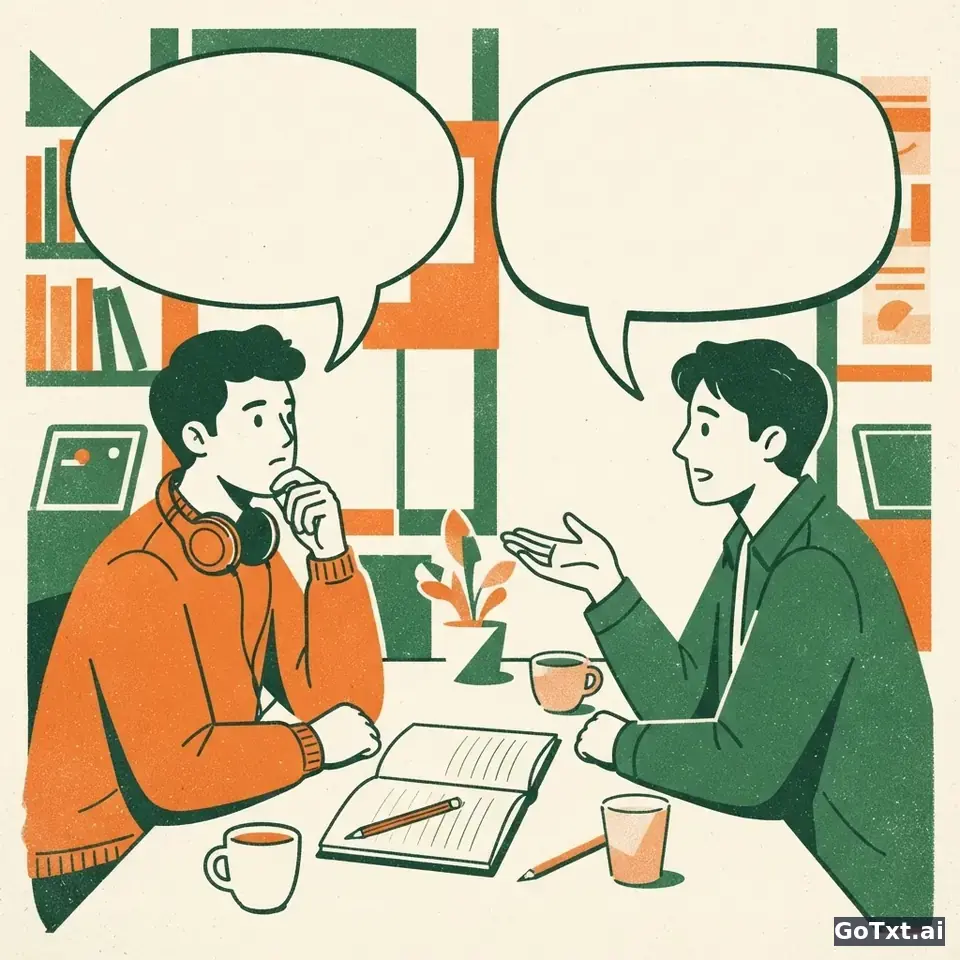
My students often panic at the first awkward gap in a Polish conversation. They rush to fill it, usually with an English "um" or a nervous laugh. But here's the thing I tell every class: silence isn't your enemy, it's part of the grammar. In Polish, a well-placed pause can mean no, thank you, I'm thinking, or please go on — all without a single word. Learning to read those gaps is as important as learning dziękuję or przepraszam. So let's talk about the sounds we don't make — and the ones we do when we're stalling.
Polish practice
Pronunciation practice
Listen to the phrase, repeat into the mic — your teacher analyzes the audio and gives a real pronunciation score with corrections and comments.
1 / 3
Cześć, jak się masz?
hello, how are you?
Filler words: the Polish "um" and "uh" — Everyday Polish conversation
Every language has its verbal pause, and Polish is no exception. Instead of "um," you'll hear no (yes, the word for "yes" — but here it's a filler, not an answer), yyy, or tego. These tiny sounds buy you time while your brain catches up with your mouth. The trick is not to overuse them — a Polish listener will notice if every sentence starts with no, więc….
| English | Polish filler | When it appears |
|---|---|---|
| um / uh | yyy | Mid-sentence, searching for a word |
| like / so | no | Starting a thought or agreeing |
| well / that is | tego | Stalling before an explanation |
When silence is polite
In Polish culture, a short pause before answering a request is often a sign of respect — it shows you're actually considering it, not brushing the person off. If someone asks Możesz mi pomóc? and you answer instantly, it can feel dismissive. A beat of silence, then Jasne, już się tym zajmę, sounds far warmer. This is where learners from fast-turnover conversation cultures get it wrong: they fill the gap out of habit and accidentally sound impatient.
Silence as doubt — and as a trap
Not all pauses are friendly. A long, flat silence after your question can signal no nie wiem — genuine uncertainty or quiet disagreement. Watch the face, not just the gap. The danger for learners is mistaking a thinking-pause for a rejection, then over-explaining and digging a deeper hole. My rule of thumb: count to three before you rescue a silence. Often the other person was simply gathering their thoughts.
| English meaning | Polish phrase | Pause type |
|---|---|---|
| Sure, I'll handle it | Jasne, już się tym zajmę | Polite beat |
| I don't really know | No nie wiem | Doubtful silence |
| How do I say this? | Jak to powiedzieć? | Thinking filler |
No nie wiem… Jak to powiedzieć?
Comments
Article discussion: learner comments and GoTxt teacher replies
Drop your emotions below — love, debates, even hate welcome. Comment 👇
Don't want to miss my reply? Leave your email — I'll send a copy.