 Pausas y silencios en coreano · Soo-jin · GoTxt
GoTxt Soo-jin Blog Pausas y silencios en coreano
The Art of Saying Nothing: Pauses and Silence in Korean Speech — How To Speak Korean
Why Korean speakers pause, hesitate, and stay silent — and how to read those gaps instead of filling them. A practical guide for English learners of Korean. How To Speak Korean.
My students often tell me they feel fluent right up until the moment a Korean conversation goes quiet. Then panic sets in. They rush to fill the gap, and suddenly they've said something that lands wrong. Here's the thing I tell every class: in Korean, silence is not empty. A pause can be 잠시만요 — a polite "one moment" — or it can be 글쎄요, a soft "well, I'm not sure." Same gap, completely different meaning. Learning to hear the difference is half the job.
Korean practice
Pronunciation practice
Listen to the phrase, repeat into the mic — your teacher analyzes the audio and gives a real pronunciation score with corrections and comments.
1 / 3
안녕하세요, 잘 지내세요?
hello, how are you?
Why Korean Pauses Feel Longer — Speak Korean like a local
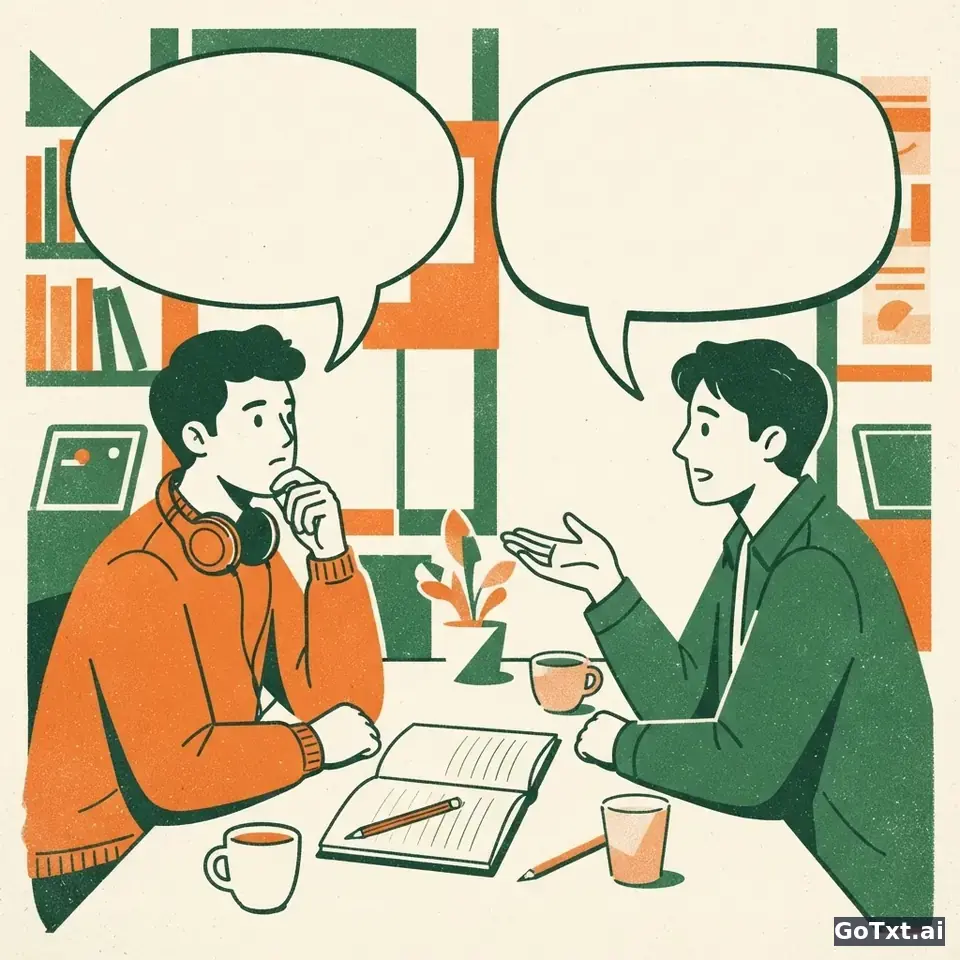
Korean conversation runs on a different rhythm than English. English speakers tend to treat a gap as an invitation to jump in — it's almost rude to let silence sit. Korean speakers often use that same gap to show they're considering your words carefully, especially with someone older or in a formal setting. Jumping in too fast can read as impatient.
The fillers matter too. English "um" and "uh" are near-reflexes; Korean has its own set, and using the wrong one sounds off:
| English filler | Korean equivalent | When it fits |
|---|---|---|
| um, uh | 음… | thinking, casual |
| hey, so… | 저기… | getting attention, polite |
| well… | 글쎄요 | genuine uncertainty |
| just a moment | 잠시만요 | asking for time |
음… is your everyday thinking sound — soft, low, no pressure. 저기… is what you say before asking a stranger for directions; it softens the approach. 글쎄요 is the honest "I really don't know," and Koreans use it far more comfortably than English speakers use "I don't know."
잠시만요 deserves its own paragraph. It's not just "wait" — it's a courtesy marker that buys you three seconds without seeming lost.
When Silence Is Politeness, Not Confusion
Here's a pattern that trips up my English-speaking students constantly. You ask a Korean colleague a question, and instead of answering, they go quiet for two or three seconds. Your instinct screams "they didn't understand me!" So you rephrase — louder. That's usually the wrong move.
In many Korean contexts, especially with hierarchy involved, a short silence before answering signals respect: you're weighing the question rather than firing off a reply. The right response is to wait. If you must speak, a gentle
The flip side: hesitation can also be a soft refusal. If someone answers a request with a long pause and then
Comments
Article discussion: learner comments and GoTxt teacher replies
Drop your emotions below — love, debates, even hate welcome. Comment 👇
Don't want to miss my reply? Leave your email — I'll send a copy.