 Préstamos lingüísticos en alemán · Anna · GoTxt
GoTxt Anna Blog Préstamos lingüísticos en alemán
Loanwords in German: How Foreign Words Get a German Passport — Learn German
Why does "Handy" mean a mobile phone and "bekommen" mean to receive? A German teacher's guide to loanwords, false friends, and how German bends borrowed words to its own rules. Learn German.
Every language is a bit of a magpie, and German is no exception. It has been borrowing words for centuries — from Latin, French, and now overwhelmingly from English. But here's the thing I tell my students on day one: German never just takes a word. It grabs it, files off the corners, gives it a German ending, and hands it back looking suspiciously familiar. That's why das Handy is not "handy" at all — it's a mobile phone. And bekommen doesn't mean "to become"; it means "to get, to receive." The word looks like your friend and behaves like a stranger.
German practice
Pronunciation practice
Listen to the phrase, repeat into the mic — your teacher analyzes the audio and gives a real pronunciation score with corrections and comments.
1 / 3
Hallo, wie geht’s?
hello, how are you?
The three things German changes — Speak German like a local
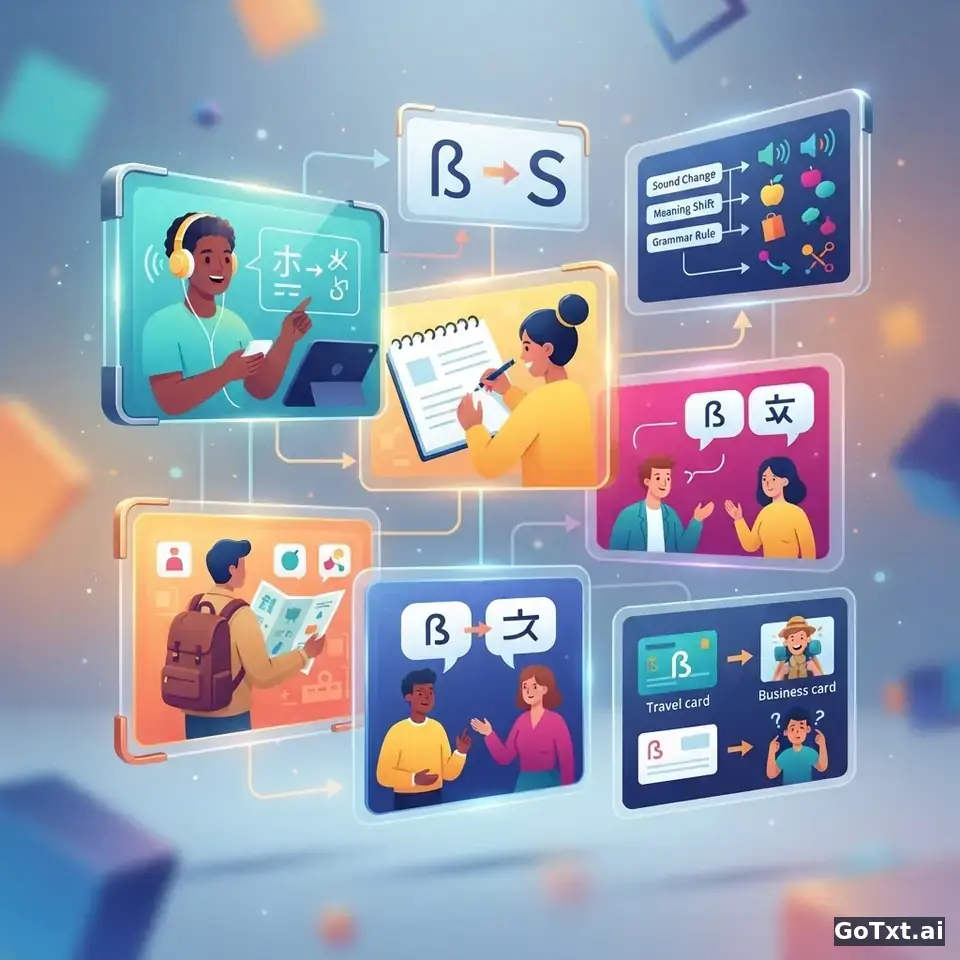
When a word crosses the border, three adjustments happen almost automatically. First, pronunciation: English "computer" becomes der Computer, but the stress and the vowels get a German accent — and the r at the end is a different animal entirely. Second, grammar: every noun needs a gender, so borrowed nouns get one assigned, often by ending. Words in -ung, -heit, -keit are reliably feminine; loanwords ending in -er (like der Computer, der Browser) usually come out masculine. Third, meaning: sometimes the sense drifts, and that's where the traps live.
| English | German | What it actually means |
|---|---|---|
| handy | das Handy | mobile phone |
| to become | bekommen | to receive, to get |
| gift | das Gift | poison |
| public viewing | Public Viewing | big-screen football party |
These are the classic false friends, and I've watched confident students order a "gift" and get a very strange look in return. Learn the meaning, not the resemblance.
When German builds its own "English"
My favourite category is the pseudo-anglicism: words that look English but don't exist in English. Der Beamer is a projector, not a BMW. Das Public Viewing is a public screening, not a funeral. Der Smoking is a dinner jacket. English speakers hear these and smile, because the grammar underneath is pure German — note the capital letters and the article: der Beamer, das Handy, der Smoking. German treats these imports as full citizens: capitalised, gendered, declined, pluralised. One Handy, two Handys.
Comments
Article discussion: learner comments and GoTxt teacher replies
Drop your emotions below — love, debates, even hate welcome. Comment 👇
Don't want to miss my reply? Leave your email — I'll send a copy.