Linh Blog Grammar That Sounds Weird: 4 Vietnamese Traps That Instantly Reveal You're a Foreigner
Grammar That Sounds Weird: 4 Vietnamese Traps That Instantly Reveal You're a Foreigner
You can memorize every Vietnamese grammar rule and still sound foreign. Here are four traps where correct grammar sounds unnatural — and how to fix them.
I've taught Vietnamese for years, and there's one moment I always wait for with a new student. They've nailed the tones, they know their
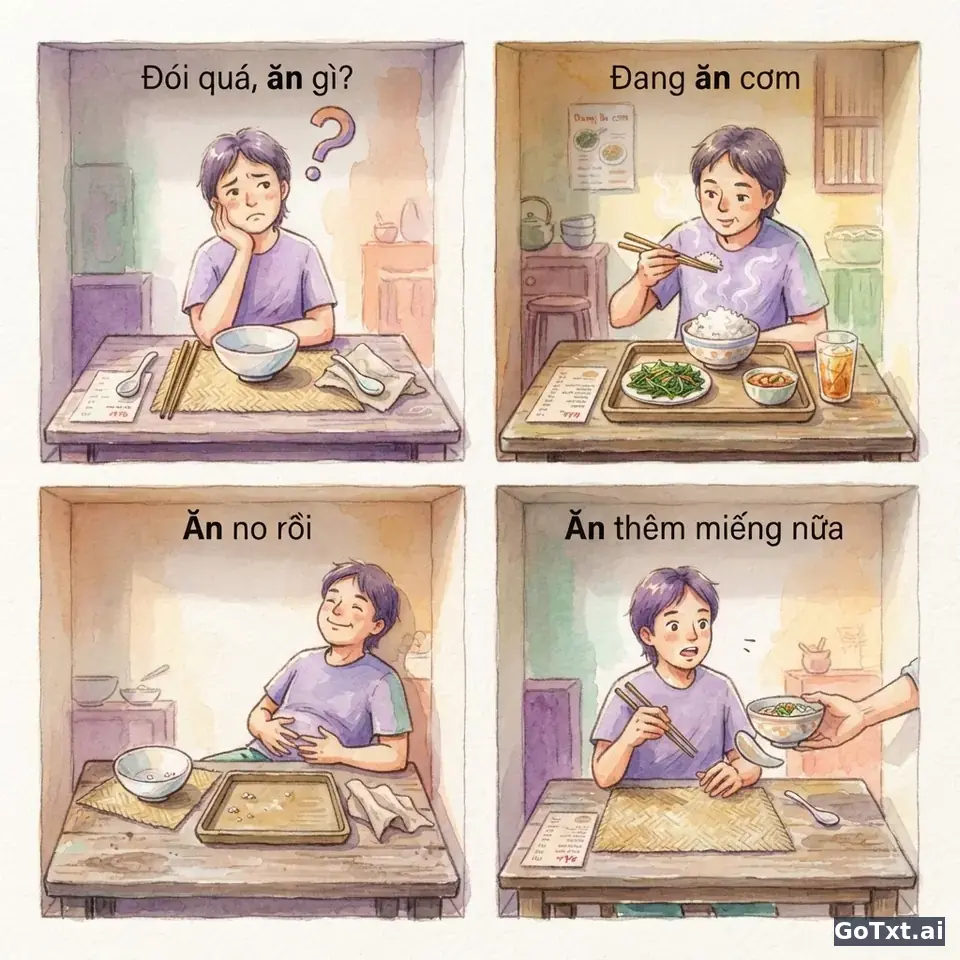
That gap between «correct» and «natural» is the whole game in Vietnamese. English does a lot of work with intonation, word order, and context — things you feel but never name. Vietnamese pushes that work into little grammatical particles that sit inside the sentence like furniture. Skip them, and you sound like a textbook. Use them wrong, and you sound like a tourist reading a menu out loud.
Today I want to walk through four of these traps. Not to scare you — to save you from the polite silence.
Trap 1: The Missing ạ and dạ
In English, politeness is tone and word choice — you feel it. In Vietnamese, politeness is often a literal word glued onto the sentence. When you answer a question from someone older, you don't just say vâng or dạ — you often end with ạ.
| English intent | Sounds natural | Sounds foreign |
|---|---|---|
| Yes (to an elder) | Dạ, vâng ạ | Vâng |
| Thank you (formal) | Cảm ơn anh ạ | Cảm ơn anh |
| Sorry (to a teacher) | Xin lỗi cô ạ | Xin lỗi cô |
The meaning is identical. The temperature is not. Without ạ, you're technically fine, but you sound like you're talking to a peer when you're talking to a grandparent.
Trap 2: Đã, đang, sẽ — Tense You Didn't Ask For
English marks tense on the verb: I ate, I eat, I will eat. Vietnamese marks time with little words before the verb, and here's the trap — you often don't need them at all if context already says it.
| English | Over-marked (foreign) | Natural |
|---|---|---|
| I already ate | Tôi đã ăn rồi (redundant) | Tôi ăn rồi |
| I'm eating now | Tôi đang ăn bây giờ | Tôi đang ăn |
| I'll go tomorrow | Tôi sẽ đi ngày mai | Mai tôi đi |
Notice the last one: the future word sẽ disappears because mai already did the job. Stacking both is like saying «I will tomorrow will go.» Grammatically defensible, audibly foreign.
Trap 3: Classifiers — the Word You Forgot Existed
This is the one that gets everybody. In English, «two books» is just a number and a noun. In Vietnamese, almost every noun needs a classifier — a little word that says what kind of thing it is.
| English | Correct | Wrong |
|---|---|---|
| two books | hai quyển sách | hai sách |
| three dogs | ba con chó | ba chó |
| one house | một ngôi nhà | một nhà |
Drop the classifier and a Vietnamese speaker hears a hole in the sentence. They'll understand you — but the missing con, quyển, ngôi is exactly the kind of thing that flags a foreigner instantly.
Comments
Article discussion: learner comments and GoTxt teacher replies
Drop your emotions below — love, debates, even hate welcome. Comment 👇
Don't want to miss my reply? Leave your email — I'll send a copy.