Linh Blog You or You? Mastering Vietnamese Address Words Without Sounding Rude
You or You? Mastering Vietnamese Address Words Without Sounding Rude
Vietnamese has no single word for "you" — it has dozens. Learn how **anh**, **chị**, **em**, and **bạn** work, when to switch registers, and the mistakes English speakers make every day.
Every English speaker walks into Vietnamese with one comfortable assumption: that "you" is a word. It isn't. In Vietnamese, "you" is a relationship. The moment you open your mouth, you're deciding whether the person in front of you is older, younger, a stranger, a friend, or family — and the pronoun you pick announces that decision out loud. Say bạn to a 60-year-old shopkeeper and you sound like a cheeky teenager. Say em to someone younger than you and you accidentally claim authority you may not have. The good news: once you see the logic, it stops feeling like a minefield and starts feeling like a system. Let's walk through it.
The Core Rule: Age Before Grammar
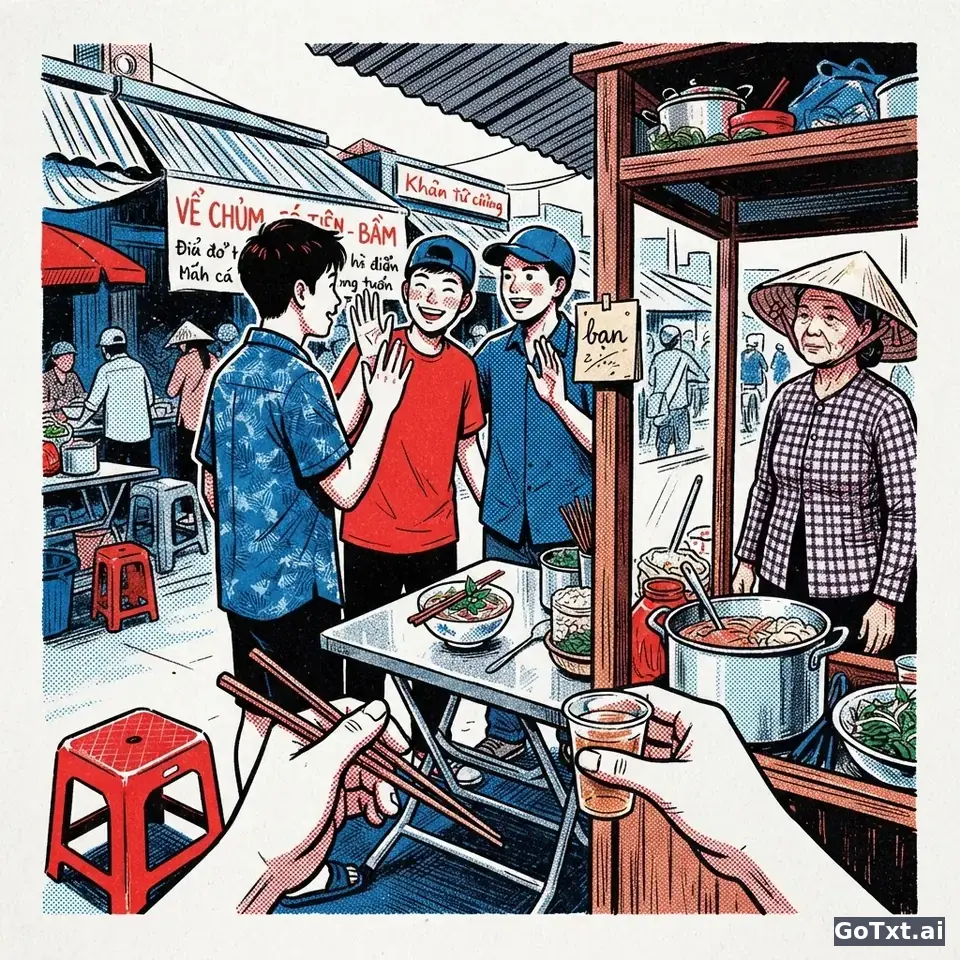
Vietnamese address words are built on two axes: relative age and familiarity. Unlike English, where "you" is neutral, Vietnamese forces you to pick a kinship term or a neutral one. The safest neutral word for a peer you don't know well is bạn. For someone clearly older, you use anh (older brother / older man) or chị (older sister / older woman). For someone clearly younger, em. For an elderly person,
The trap: these words are reciprocal but not symmetric. If you call someone anh, they will call you em back. You don't both use the same word. This is the single biggest adjustment for English speakers, because English "you" is a mirror. Vietnamese pronouns are a seesaw.
| English | Vietnamese | Who says it to whom |
|---|---|---|
| you (peer, neutral) | bạn | same age, casual or polite |
| you (older man) | anh | younger speaker → older man |
| you (older woman) | chị | younger speaker → older woman |
| you (younger person) | em | older speaker → younger person |
| you (elderly man) | ông | anyone → much older man |
| you (elderly woman) | bà | anyone → much older woman |
Formal vs Informal: It's About Distance, Not Politeness
Here's where English intuition fails hardest. In English, "you" is always polite and "hey you" is rude. In Vietnamese, politeness comes from choosing the right kinship word, not from a formal/informal switch. There's no Vietnamese equivalent of French vous that you can bolt on to sound respectful. Instead:
- With a stranger your age: bạn is fine, slightly warm.
- With a stranger older: anh / chị is the default, not optional.
- With a close friend: you might use mày / tao — but this is intimate or aggressive depending on tone. Do not use it with strangers. Ever.
- In a shop or office: anh / chị with staff, em with younger staff.
That's the peer version — friendly, safe, works with someone your own age you just met.
Comments
Article discussion: learner comments and GoTxt teacher replies
Drop your emotions below — love, debates, even hate welcome. Comment 👇
Don't want to miss my reply? Leave your email — I'll send a copy.