Галина Blog Decoding Russian Humor: What "Ёлки-палки" and a Runaway Sausage Teach You About the Language
Decoding Russian Humor: What "Ёлки-палки" and a Runaway Sausage Teach You About the Language
A deep dive into a classic Russian anecdote about a sausage, with grammar breakdowns, cultural notes, and the untranslatable little words that make Russian jokes land.
Every language hides its sense of humor in the small words — the ones textbooks skip. Russian is a goldmine here, and my favorite entry point is a silly little anecdote my students always remember: a man buys колбаса (sausage), and it runs away. That's it. That's the joke. But unpack it, and you get a whole masterclass in Russian word-building, diminutives, and the peculiar logic of русский юмор.
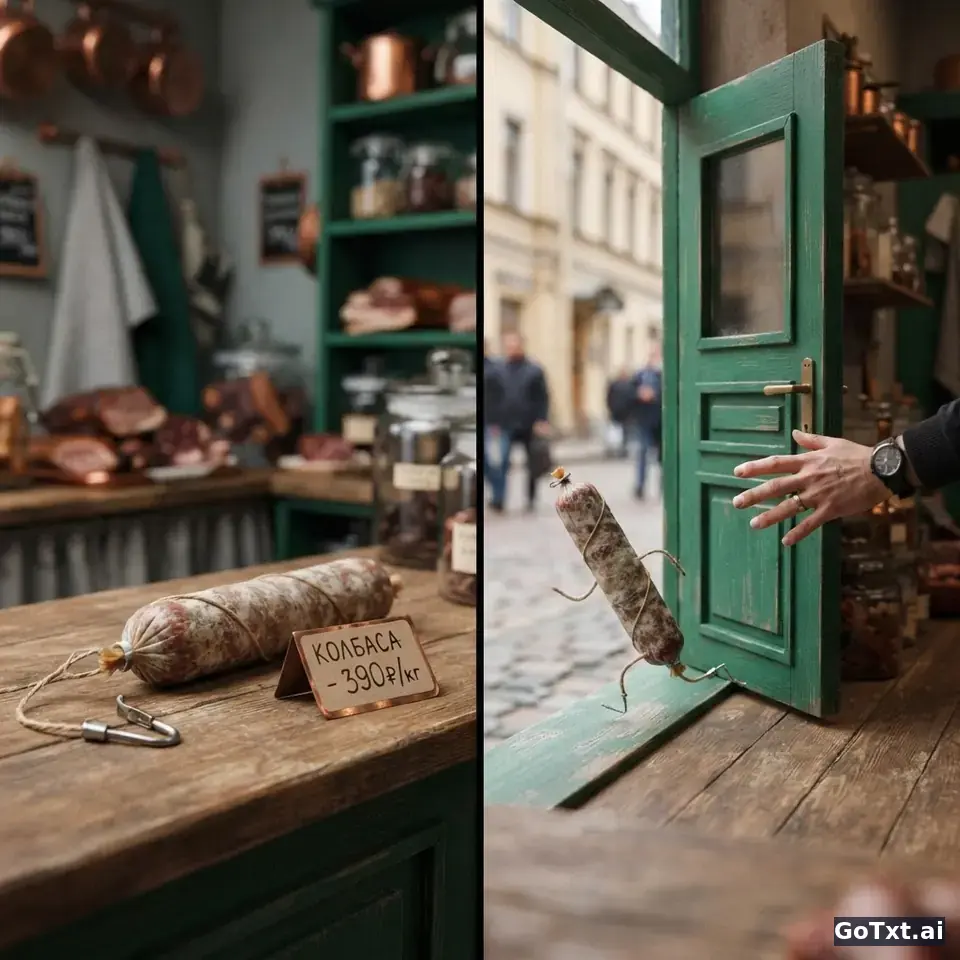
The joke goes like this: Мужик приходит в магазин и спрашивает: У вас есть колбаса? Продавщица отвечает: Есть, но она убежала. — A guy comes into a shop and asks: "Do you have sausage?" The saleswoman answers: "We do, but it ran away." On the surface, absurd. Underneath, it's a quiet satire of Soviet-era shortages, where goods were so scarce they took on a life of their own. Let's pull it apart.
The Grammar Trap: Why убежала and Not убежал
The joke hinges on one ending. Колбаса is grammatically feminine, so the verb agrees with her: она убежала. Beginners often guess убежал because sausage feels like a "thing," not a "she." Russian assigns gender to every noun, and the verb must follow.
| English | Correct | Wrong |
|---|---|---|
| The sausage ran away | Колбаса убежала | Колбаса убежал |
| The guy asked | Мужик спросил | Мужик спросила |
| The saleswoman said | Продавщица сказала | Продавщица сказал |
Notice the mirror image: мужик is masculine, продавщица is feminine. The gender lives in the noun, but the verb pays the tax.
Small Words, Big Punch: У вас есть…
The question «У вас есть колбаса?» is the single most useful construction for shopping in Russian. Literally it means "By you there is sausage?" — no verb "to have" at all. Russian expresses possession with у + genitive + есть.
| English | Russian pattern | Literal feel |
|---|---|---|
| Do you have sausage? | У вас есть колбаса? | By you is sausage? |
| I have a question | У меня есть вопрос | By me is a question |
| We don't have it | У нас нет колбасы | By us isn't sausage (genitive!) |
That last row is the sneaky one: when you negate есть, the noun flips to the genitive — колбасы, not колбаса. Russian loves to punish certainty with a case change.
The Cultural Layer: Why "She Ran Away" Is Funny
The humor isn't random. In the Soviet economy, дефицит (shortage) was a way of life. Queues formed before shops opened; goods vanished. Saying a sausage убежала turns a grim reality into gentle absurdity — the thing you wanted literally fled before you could grab it. It's the same energy as the English "it walked off the shelf," but with a warmer, more resigned shrug.
Comments
Article discussion: learner comments and GoTxt teacher replies
Drop your emotions below — love, debates, even hate welcome. Comment 👇
Don't want to miss my reply? Leave your email — I'll send a copy.