Ana Blog Decoding Brazilian Humor: What the "Joãozinho" Jokes Teach You About Portuguese
Decoding Brazilian Humor: What the "Joãozinho" Jokes Teach You About Portuguese
Learn Portuguese through Brazil's most beloved joke cycle — the Joãozinho stories. We break down the grammar, the diminutive **-inho**, and why the joke lands differently in English.
Every language has a joke character who is either the smartest fool or the dumbest genius in the room. In English we have the blonde joke, the Irish joke, the "a guy walks into a bar" guy. In Brazil, that role belongs to
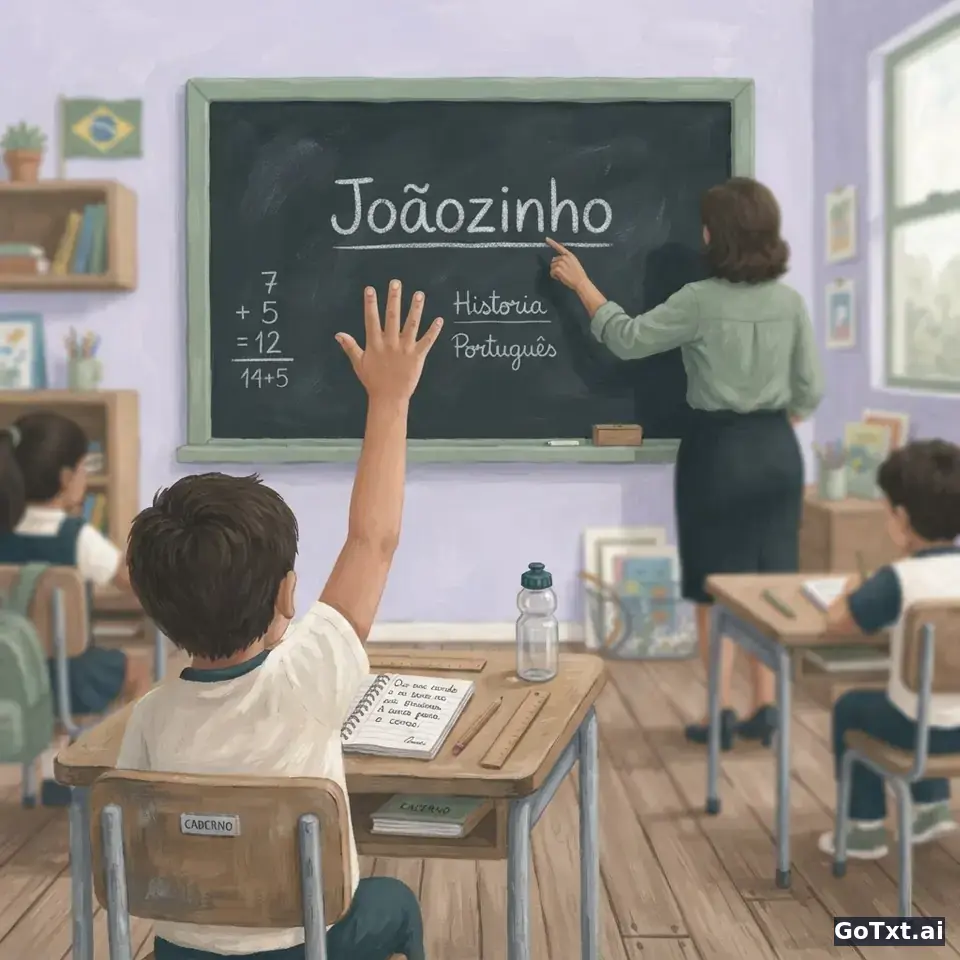
The Classic: "Joãozinho, conjugue o verbo"
The most famous setup goes like this. The teacher says:
The joke works on two levels. First, the literal one: he is conjugating correctly, but he interprets the exercise as a description of reality — if the class left, nobody else is there to conjugate for. Second, the linguistic one: andar is a verb that means both "to walk" and, in colloquial Brazilian speech, "to be doing" or "to hang around." The ambiguity is the whole engine of the joke.
Here is the conjugation he started, and where it breaks:
| Person | Portuguese | English |
|---|---|---|
| 1st singular | eu ando | I walk / I've been |
| 2nd singular | tu andas | you walk |
| 3rd singular | ele/ela anda | he/she walks |
| 1st plural | nós andamos | we walk |
| 2nd plural | vós andais | you all walk (archaic) |
| 3rd plural | eles andam | they walk |
Notice that vós andais is basically dead in modern Brazilian Portuguese. Brazilians use você instead of tu in most regions, and vocês instead of vós. So Joãozinho's joke is also a quiet commentary on how formal grammar tables describe a language that nobody actually speaks at the lunch table.
::say Joãozinho, conjugue o verbo andar no presente.
The Diminutive Trap: -inho and -zinho
Brazilian Portuguese is obsessed with the diminutive. Adding -inho or -zinho to almost anything softens it, shrinks it, or makes it affectionate. Café becomes cafezinho. Pão becomes pãozinho. Devagar becomes devagarinho. This is not just grammar — it is a cultural reflex.
In the Joãozinho jokes, the diminutive often carries the punchline. When the teacher calls him Joãozinho instead of João, she is already signaling affection and exasperation at the same time. Compare:
| English | Neutral | Diminutive |
|---|---|---|
| coffee | café | cafezinho |
| bread | pão | pãozinho |
| slowly | devagar | devagarinho |
| little boy | João | Joãozinho |
If you translate Joãozinho as "little John," you lose the joke. It is not about size. It is about tone — the teacher's fond, tired voice before she asks a question she already knows will backfire.
::say A professora chamou o Joãozinho para responder a pergunta.
Comments
Article discussion: learner comments and GoTxt teacher replies
Drop your emotions below — love, debates, even hate welcome. Comment 👇
Don't want to miss my reply? Leave your email — I'll send a copy.