Priya Blog The Hindi Verb **Karnā** — Your Shortcut Through Hindi's Most Useful Trap
The Hindi Verb **Karnā** — Your Shortcut Through Hindi's Most Useful Trap
A teacher's deep dive into **karnā**, the Hindi verb "to do," with its full conjugation tables, the mistakes English speakers always make, and memory tricks that actually stick.
Every Hindi learner I've taught hits the same wall around week three. They can order chai, they can say merā nām Priya hai, and then someone asks them to do something and they freeze. Because the most common verb in the entire language is also the one nobody warns you about: karnā — "to do." It shows up in kyā kar rahe ho?, it hides inside safāī karnā (to clean), and it refuses to behave like the neat little verbs in your textbook. Let's fix that today.
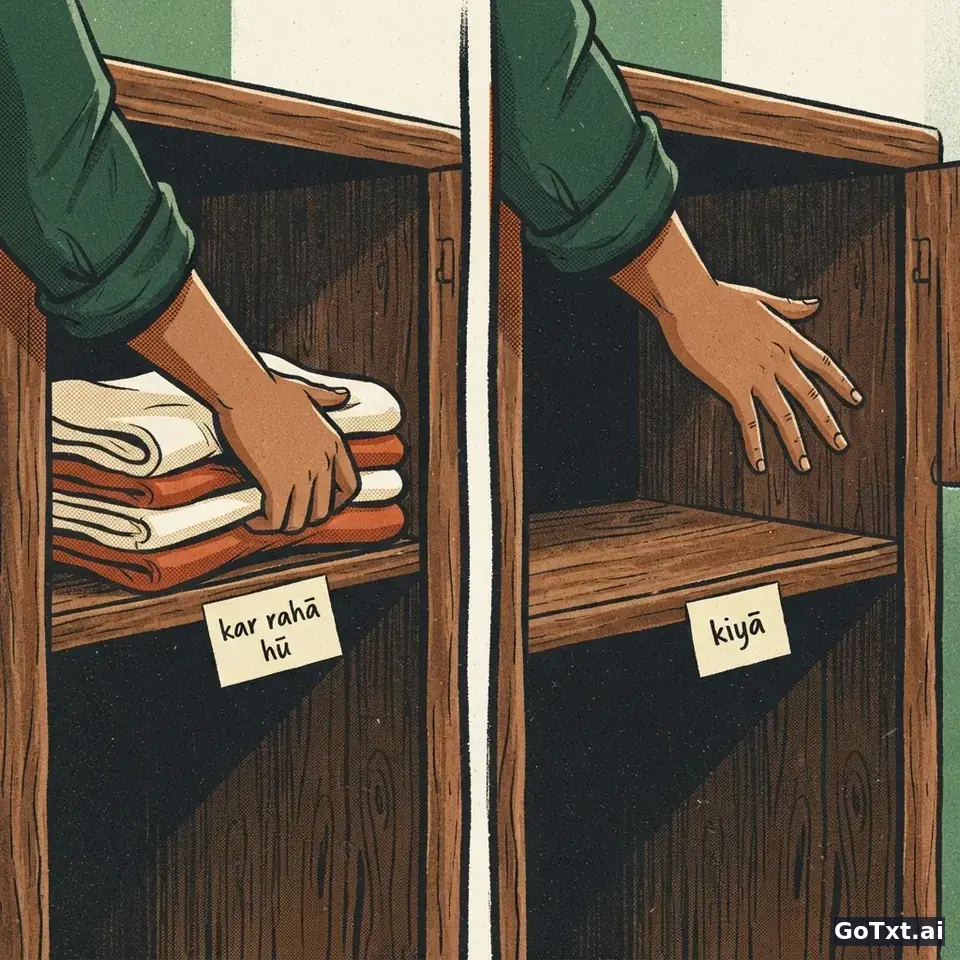
What Karnā Actually Means
English splits "do" and "make," but Hindi doesn't care. Karnā covers both, plus a huge family of noun+verb combos. You don't "take" a shower in Hindi — you snān karnā. You don't "make" a decision — you faislā karnā. This is why learners sound stiff: they hunt for a special verb that doesn't exist.
| English | Hindi (correct) | Literal trap |
|---|---|---|
| to do work | kām karnā | not "work do" word order |
| to make tea | cāy banānā | here it's banānā, not karnā |
| to take a bath | snān karnā | no "take" verb |
| to decide | faislā karnā | no "make" verb |
Notice the trap: cāy banānā uses banānā (to make/build), not karnā. Beginners overuse karnā and say cāy karnā, which sounds like you're doing tea as a hobby. Learn the pairs, not just the verb.
The Forms You Must Own
Here's the full present, past, and future. Read the table slowly — Hindi changes the verb ending by gender and number, which English never does.
| Tense | Masculine | Feminine |
|---|---|---|
| Present (I do) | mẽ kartā hū̃ | mẽ kartī hū̃ |
| Present (he/she does) | vah kartā hai | vah kartī hai |
| Past (I did) | mẽne kiyā | mẽne kī |
| Past (they did) | unhone kiyā | unhone kī |
| Future (I will do) | mẽ karū̃gā | mẽ karū̃gī |
| Continuous (doing) | kar rahā hū̃ | kar rahī hū̃ |
The past tense is the sneaky one. Karnā becomes kiyā (masc.) or kī (fem.) — it doesn't look like kar- at all. That irregularity is exactly why it's worth memorizing early.
Three Mistakes English Speakers Make
First, they forget the gender ending. Saying mẽ kartā hū̃ when you're a woman is like wearing someone else's name tag. Second, they use karnā for everything, producing khānā karnā instead of khānā banānā or khānā khānā. Third, they put the object in the wrong case in the past tense — mẽne kām kiyā needs ne on the subject, always.
| Wrong | Right | Why |
|---|---|---|
| mẽ cāy kartā hū̃ | mẽ cāy banātā hū̃ | tea is made, not done |
| mẽ kām kiyā | mẽne kām kiyā | past needs ne |
| vah kartā hū̃ | vah kartā hai | match person |
Comments
Article discussion: learner comments and GoTxt teacher replies
Drop your emotions below — love, debates, even hate welcome. Comment 👇
Don't want to miss my reply? Leave your email — I'll send a copy.