Priya Blog Grammar That Sounds Off: 4 Hindi Traps That Mark You as a Foreigner
Grammar That Sounds Off: 4 Hindi Traps That Mark You as a Foreigner
You learned the rules, so why do natives still pause? Four Hindi grammar traps where textbook-correct sentences sound strange — and how to fix them.
I still remember the first time a student proudly told me
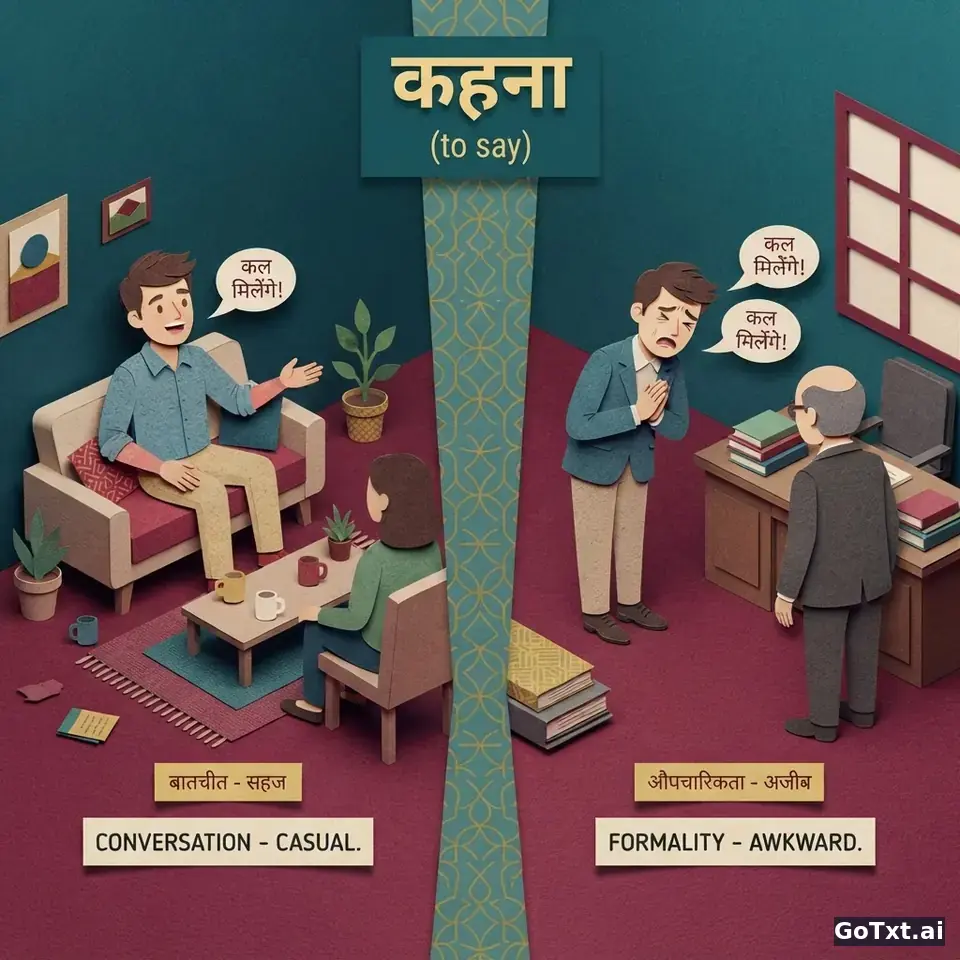
Why "correct" is not the same as "natural"
English leans hard on word order and stress to do emotional work. Hindi pushes that work into grammar itself: verb endings, postpositions, and the choice between
Trap 1: Picking the wrong "you"
English has one you. Hindi has three, and they are not interchangeable.
| English | Hindi form | Used with |
|---|---|---|
| you (intimate) | तू | close friends, children, God, or insult |
| you (familiar) | तुम | friends, peers, younger people |
| you (respectful) | आप | elders, strangers, bosses, anyone you'd "sir" |
The trap: learners default to आप everywhere to be safe. It is safe, but it sounds distant — like calling your best friend "sir." Meanwhile तू with a stranger is not casual, it is a fight waiting to happen.
Trap 2: Verb agreement that follows meaning, not grammar
Hindi verbs agree with gender and number, but the "number" is sometimes logical, not literal. A collective noun like लोग (people) is grammatically singular-ish but takes plural verbs. And आप always takes plural verb forms even when you mean one person.
| English | Wrong | Correct |
|---|---|---|
| You (respectful) are coming | आप आ रहा है | आप आ रहे हैं |
| The people went | लोग गया | लोग गए |
| She is a teacher | वह शिक्षक है (ok, but flat) | वह शिक्षिका हैं (respectful) |
That last row trips everyone: using the feminine शिक्षिका and plural हैं for a woman you respect is normal Hindi, not flattery.
Trap 3: The postposition you forgot to attach
English prepositions float. Hindi postpositions cling to the noun and change its shape. में (in), पर (on), को (to) all demand the oblique form.
| English | Wrong | Correct |
|---|---|---|
| I went to the market | मैं बाज़ार को गया | मैं बाज़ार गया |
| Give it to the boy | लड़का को दो | लड़के को दो |
| On the table | मेज़ पर (ok) | मेज़ पर (ok, but मेज़ stays) |
Notice the first row: बाज़ार needs no postposition at all. Learners add को because English says "to." Native ears hear the extra word immediately.
Comments
Article discussion: learner comments and GoTxt teacher replies
Drop your emotions below — love, debates, even hate welcome. Comment 👇
Don't want to miss my reply? Leave your email — I'll send a copy.