Anna Blog German Grammar That Sounds Weird: 4 Traps That Instantly Reveal an English Speaker
German Grammar That Sounds Weird: 4 Traps That Instantly Reveal an English Speaker
Why correct German still sounds foreign to native ears — four grammar traps where English intonation and word order betray you, with fixes you can practice today.
I've been teaching German long enough to know the exact moment a student stops being "impressive" and starts being "obviously English." It's almost never vocabulary. It's grammar that is technically correct but sounds like a robot reading a manual. The classic example: a student wants to say "I like this song," reaches for the verb gefallen, and proudly announces Ich gefalle dieses Lied. Every word is real German. The sentence is still a crime scene. What they meant was
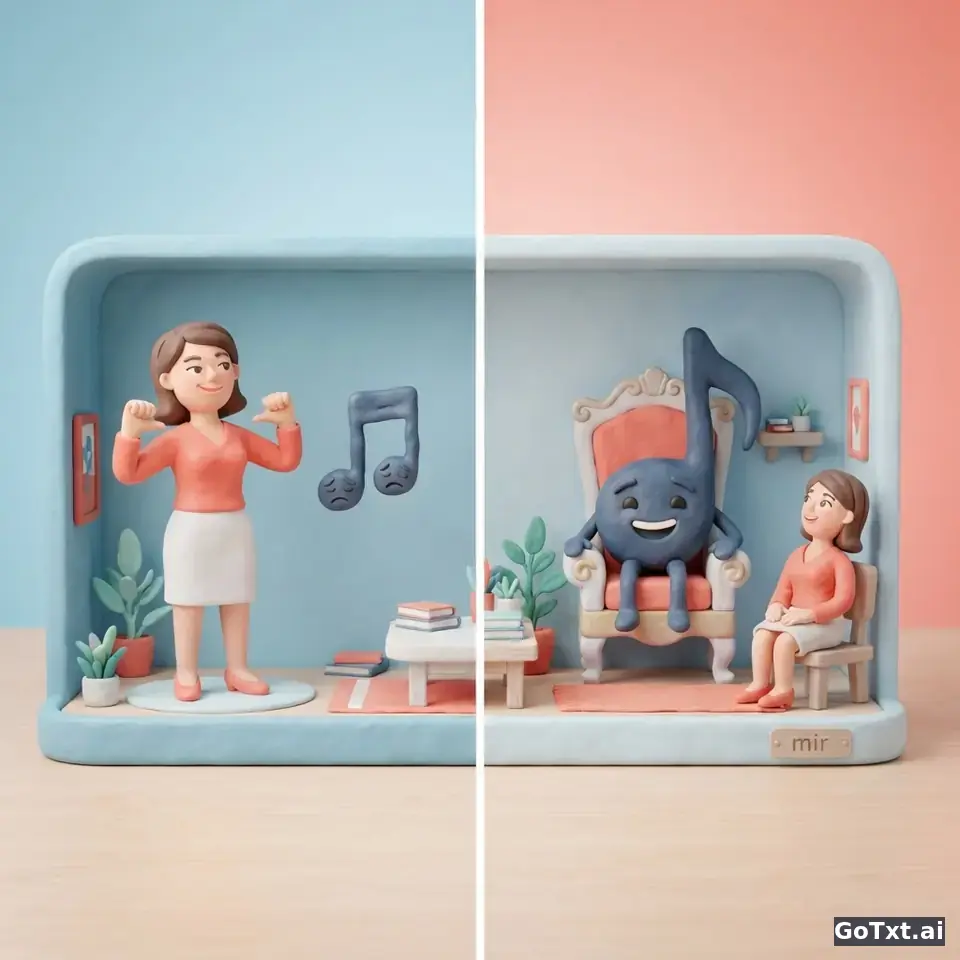
Why "correct" and "natural" are different animals
English does a huge amount of emotional and logical work with intonation, stress, and word order. German does it with case, particles, and verb position. So when you translate your English intentions into German forms, you keep the English skeleton and dress it in German words. Native speakers hear the skeleton. They hear where you put the stress, which word you made the subject, whether you reached for a modal particle or just stated a fact like a police report. Grammar isn't decoration in German — it's the tone of voice.
Trap 1: The subject you didn't need
English loves "I." German often doesn't. If the meaning is clear, natives drop the subject or flip it entirely.
| English instinct | Sounds foreign | Sounds native |
|---|---|---|
| I like this song | Ich gefalle dieses Lied | Das Lied gefällt mir |
| I'm cold | Ich bin kalt | Mir ist kalt |
| I have a headache | Ich habe einen Kopfschmerz | Ich habe Kopfschmerzen |
Ich bin kalt doesn't mean "I'm cold" — it means you're a cold person, emotionally. The dative Mir ist kalt is what your body feels. One case, completely different human.
Trap 2: Verb position as a mood
In English, moving the verb around is rare and dramatic. In German, the verb's position is the mood. Main clause: verb second. Subordinate clause: verb last. And that final verb changes how a sentence lands.
Both are fine. But the dass version sounds careful and complete; the version without dass sounds casual, like you're mid-thought with a friend. English speakers overuse dass because it mirrors "that." Natives skip it constantly. Use it too much and you sound like a formal letter that learned to talk.
Trap 3: Modal particles — the grammar English doesn't have
This is the trap that gives you away fastest. German has tiny words — doch, mal, ja, halt, eben — that carry no dictionary meaning but carry all the attitude. English does this with tone: "Come on," "just try it." German does it with grammar.
Comments
Article discussion: learner comments and GoTxt teacher replies
Drop your emotions below — love, debates, even hate welcome. Comment 👇
Don't want to miss my reply? Leave your email — I'll send a copy.