Sophie Blog Irregular Verbs: One Verb, All Its Forms, Explained Step by Step
Irregular Verbs: One Verb, All Its Forms, Explained Step by Step
Take the French verb **prendre** apart form by form — present, passé composé, futur, and the traps English speakers fall into every single time.
Most of my students can recite regular -re verbs in their sleep, then meet prendre and suddenly forget how to speak. That's normal — prendre (to take) is irregular, and it drags a whole family along with it: apprendre, comprendre, surprendre. The good news? Once you see all its forms side by side, the logic clicks. Let's break it down step by step, no panic, no memorizing random lists.
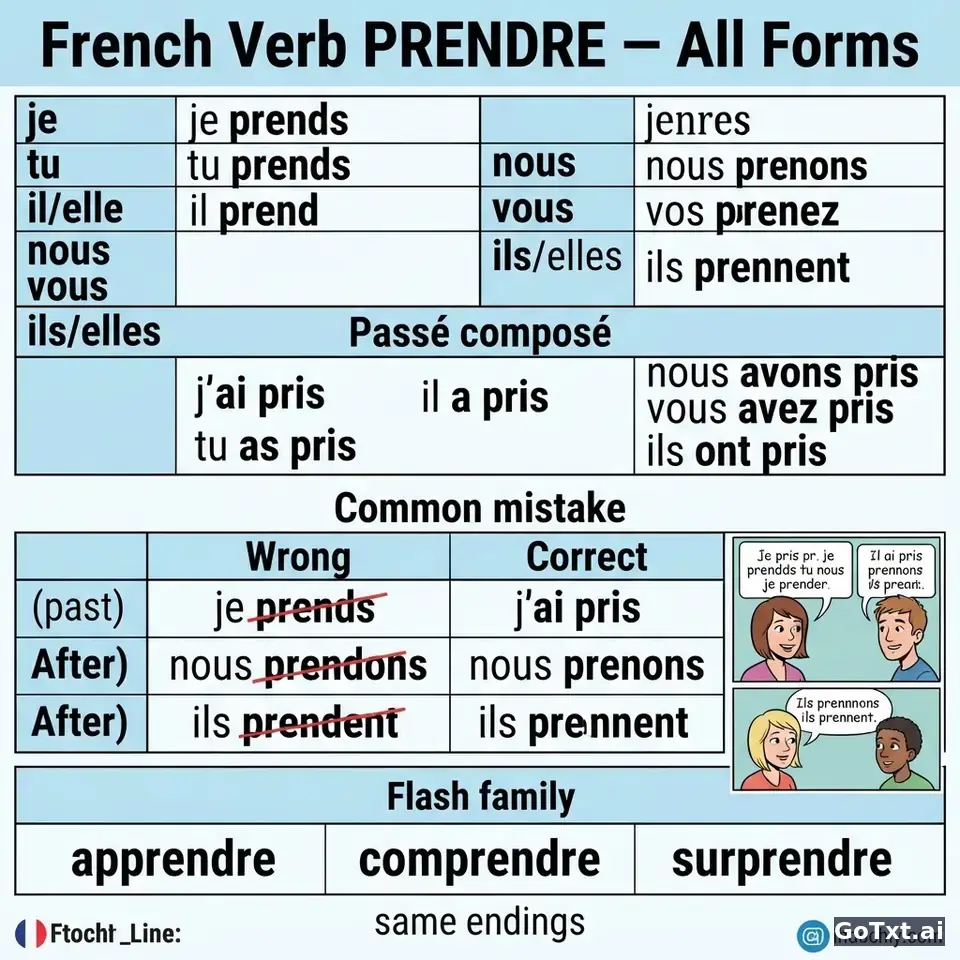
The Present Tense: Where the Double N Appears
The present is where prendre shows its personality. Notice that the plural forms drop the -d and the third person plural doubles the n:
| Person | French | English |
|---|---|---|
| je | prends | I take |
| tu | prends | you take |
| il/elle | prend | he/she takes |
| nous | prenons | we take |
| vous | prenez | you take |
| ils/elles | prennent | they take |
Two things to burn into memory: nous prenons and vous prenez keep the -n- from the stem, while ils prennent doubles it. English speakers constantly write "ils prendent" because their ear expects the infinitive ending. It doesn't exist. Say it out loud a few times.
The Past: One Participle to Rule Them All
For the passé composé, prendre uses the auxiliary avoir and an irregular participle: pris. That's it — no agreement with the subject, no surprises.
| Person | French | English |
|---|---|---|
| j' | ai pris | I took |
| tu | as pris | you took |
| il/elle | a pris | he/she took |
| nous | avons pris | we took |
| vous | avez pris | you took |
| ils/elles | ont pris | they took |
The trap here is calquing English: "I took the train" becomes j'ai pris le train, not "je pris le train" in everyday speech. The simple past exists in writing, but in conversation you'll almost always hear the composed form.
The Future and the Family Resemblance
The future stem is prendr-, which is refreshingly regular once you know it: je prendrai, tu prendras, il prendra, nous prendrons, vous prendrez, ils prendront. No double n here — that quirk stays in the present.
Now the payoff: apprendre (to learn), comprendre (to understand), and surprendre (to surprise) all follow the exact same pattern. Learn one, get four.
Comments
Article discussion: learner comments and GoTxt teacher replies
Drop your emotions below — love, debates, even hate welcome. Comment 👇
Don't want to miss my reply? Leave your email — I'll send a copy.