 Arabic verb kataba all forms · Layla · GoTxt
GoTxt Layla Blog Arabic verb kataba all forms
One Verb, All Forms: Breaking Down "to write" in Arabic — Arabic Lessons
A teacher's walkthrough of the Arabic verb **kataba** (to write) — its past, present, and command forms, the prepositions it loves, and the mistakes English speakers make most. Learn Arabic online with a clear pattern. Arabic Lessons.
Students always ask me for the "magic verb" — the one that unlocks the whole system. There isn't one, but kataba (كَتَبَ, "to write") comes close. It's the textbook sound verb: three root letters, no weak letters, no surprises. Master its forms and you've quietly learned the pattern behind hundreds of Arabic verbs — which is exactly why so many learners choose to learn Arabic online around a single strong model verb. The root is ك-ت-ب, and once you see that skeleton moving through tenses, Arabic stops feeling like a wall of random shapes.
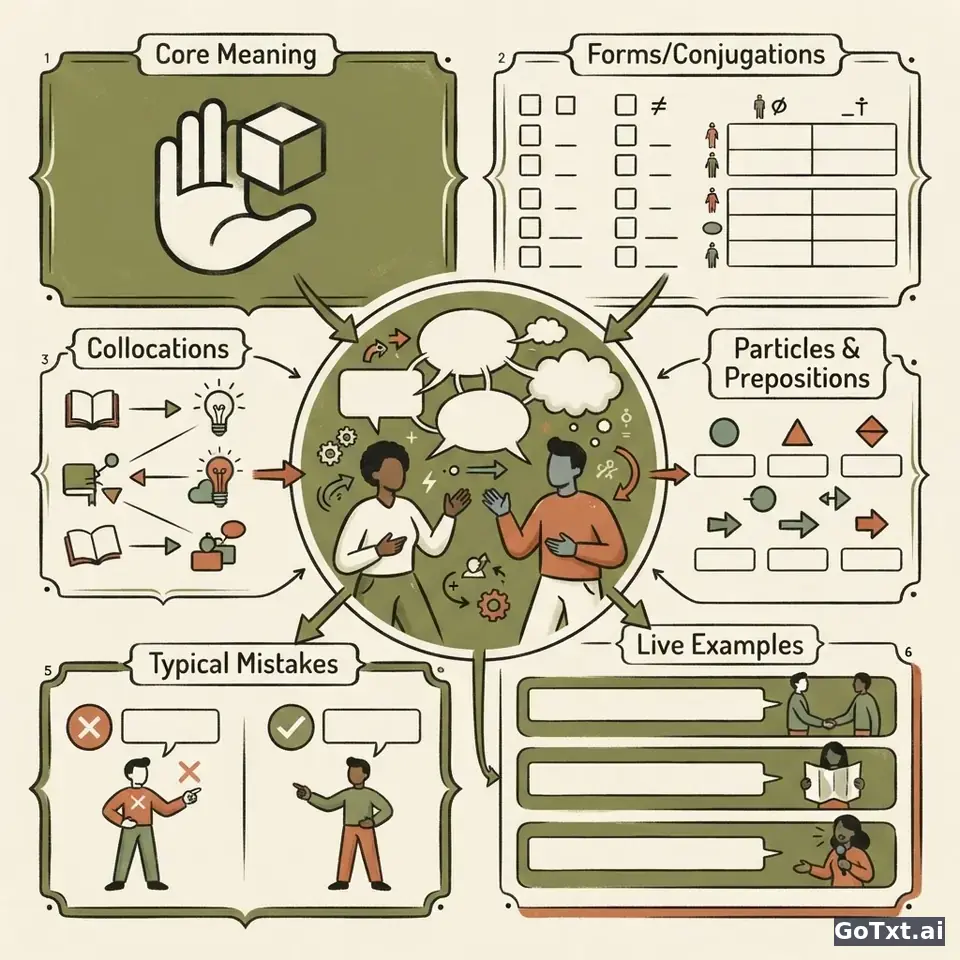
Arabic practice
Pronunciation practice
Listen to the phrase, repeat into the mic — your teacher analyzes the audio and gives a real pronunciation score with corrections and comments.
1 / 3
مرحبا، كيف حالك؟
hello, how are you?
The three tenses you actually need first
Arabic builds everything from the root, and kataba shows the pattern cleanly. The past tense is short and suffix-driven; the present tense adds prefixes and shifts the vowels; the command is its own stripped-down form. Notice how the vowels change from a-a in the past to a-u in the present — that's a pattern, not chaos.
| English | Arabic | Note |
|---|---|---|
| I wrote | كَتَبْتُ | suffix -tu = "I" |
| You wrote (m.) | كَتَبْتَ | suffix -ta |
| She wrote | كَتَبَتْ | suffix -at |
| I write | أَكْتُبُ | prefix a- |
| He writes | يَكْتُبُ | prefix ya- |
| Write! (m.) | اكْتُبْ | no prefix, no suffix |
Prepositions change the meaning
Here's where learners get lazy. Kataba doesn't just mean "to write" — it partners with prepositions to mean very different things, and translating word-for-word from English will betray you.
| English | Arabic | Literal trap |
|---|---|---|
| to write to someone | كَتَبَ إِلَى | not "to" as in direction only |
| to write about something | كَتَبَ عَنْ | "about" = عَنْ, not فِي |
| to write with a pen | كَتَبَ بِـ | instrument needs بِـ |
The classic English-speaker mistake is reaching for فِي ("in") when you mean "about." It sounds wrong to a native ear the way "I wrote in the problem" does in English.
Arabic for beginners: mistakes I see every single week
Two habits trip up English speakers constantly. First, dropping the present-tense prefixes because English relies on pronouns alone — أَكْتُبُ already contains "I," so you don't need a separate pronoun unless you're emphasizing. Second, forgetting that the command form has gender: اكْتُبْ to a man, اكْتُبِي to a woman. Say the wrong one and you'll get a raised eyebrow, not a correction.
Comments
Article discussion: learner comments and GoTxt teacher replies
Drop your emotions below — love, debates, even hate welcome. Comment 👇
Don't want to miss my reply? Leave your email — I'll send a copy.